
Episode 42: Feeling Seen Through a Late Autism Diagnosis and It's Reveal During Motherhood with Anahita Lake-Khosravi, PsyD
It might be refreshing to realize that the struggles you’ve been trying to “fix” your whole life were never flaws to begin with.
In this deeply validating and eye-opening conversation with psychologist and neurodivergence specialist Anahita Lake-Khosravi, PsyD, we’re talking about what autism and neurodivergence actually look like—especially in women who’ve gone undiagnosed for years, including perinatal and postpartum women.
Anahita shares how her early experiences shaped her path into psychology, eventually leading her to specialize in neuro-affirming assessment and therapy. What started as a passion for supporting autistic children evolved into a focused niche: teen and adult women, particularly those navigating pregnancy and postpartum.
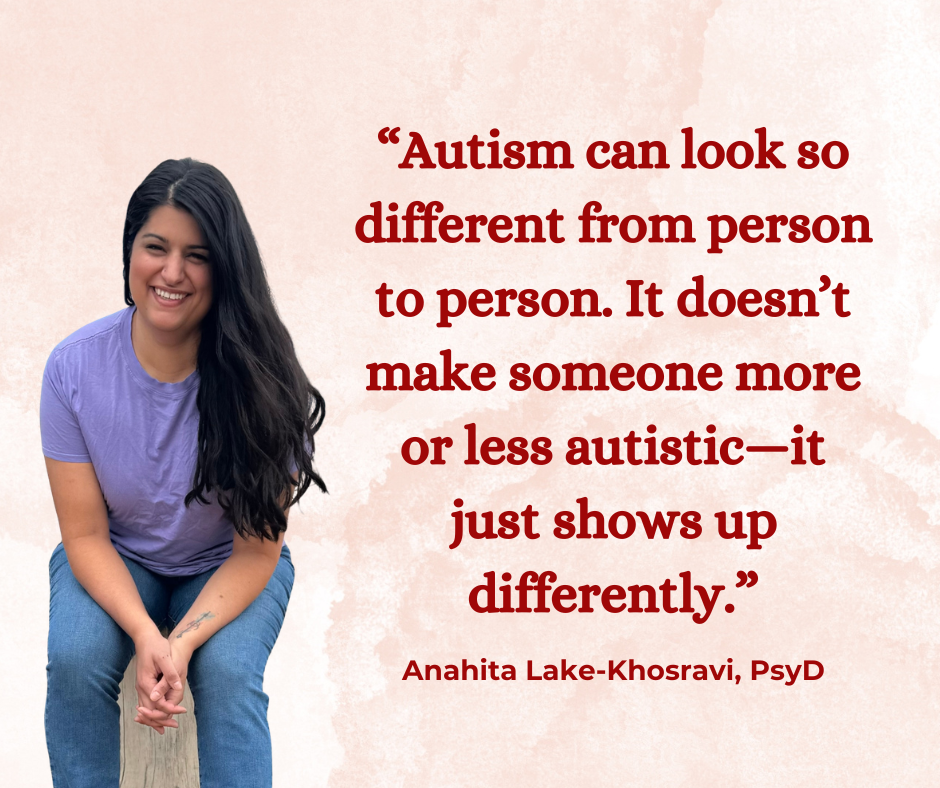
In our conversation, we challenge the outdated stereotypes of autism—the ones that have caused so many women to be overlooked, misdiagnosed, or dismissed entirely. We explore how autism exists on a spectrum, and why many women, especially those who are verbal, socially aware, and high-masking, slip through the cracks for decades.
Many people and women are given a late diagnosis. Anahita describes the emotional impact of delivering an autism diagnosis to women in their 20s, 30s, and beyond and how it often comes with relief, clarity, and a profound sense of being seen for the first time.
We talk about masking with autism, what it is, how it develops, and why it can be both adaptive and deeply exhausting. For many women, masking has allowed them to “fit in,” but at the cost of chronic overwhelm and disconnection from their true needs.
It’s in motherhood, where neurodivergence can become more visible for many women—and more challenging. From sensory overload in the postpartum period to the pressure of constant caregiving, Anahita explains why this stage of life can bring both breakthroughs and breaking points.
Rather than framing these struggles as personal shortcomings, she speaks to them as nervous system responses—offering a more compassionate and accurate understanding of what’s really happening beneath the surface.
You’ll hear:
Why autism is so often missed in women
What masking really looks like in daily life
The emotional impact of receiving a diagnosis later in life
How neurodivergence shows up in pregnancy and postpartum
Why diagnosis can be a powerful tool for self-understanding and support
How to navigate sharing (or not sharing) your diagnosis with others
Understanding yourself isn’t about finding what’s “wrong”—it’s about finally having language for what’s always been true.
Connect with Anahita:
Website: www.empoweredlivingcollective.com
Instagram: @empoweredlivingcollective and @dranahitabanoo
About Anahita: Anahita is a licensed psychologist, group practice owner, business coach and mama of 3 kids. She specializes in neuro-affirming testing and therapy, particularly for teens and adult women. She has also loved working with and specializing in the overlap of autistic women and perinatal mental health. She also coaches other therapists on increasing their revenue streams beyond private practice. She loves supporting business owners in their growth so they can live an abundant life while also getting their time back. In her free time, she enjoys working out, playing outside with her kids, and going camping!
-
On today's episode, I'm joined by Anahita, a licensed psychologist, group practice owner, business coach, and mom of three who's doing incredibly important work in the world of neurodivergence, especially for women. In this conversation, we dive into what it actually looks like for people who experience undiagnosed autism into adulthood and why so many women are only discovering this part of themselves in their 20s or 30s or even during the pregnancy and postpartum period. Anahita shares with us how getting a diagnosis later in life can be deeply validating, helping women finally make sense of the experiences they've carried for years. We also talk about masking, sensory overload, and motherhood, and the powerful shift from what's wrong with me to this is how my brain works. If you ever questioned your own experience or supported someone who has, this episode will expand your understanding in a meaningful and compassionate way. Well, I'm so excited to have you here on the podcast today, Anahita. I'd love for you to share how you got into the work that you do and what inspired you to take the path that you're on. Speaker: 02:13 Yeah, absolutely. So um so happy to be here first, first of all. I it all started in high school, honestly, and um kind of two different things happened in high school. You know, I think a lot of people, high school's a hard time, and so it was a hard time for me. Um, and I just really struggled with like self-esteem and feeling like I liked who I was. And I had a therapist who was a life-saving therapist, truly, at that time, and just saw like how honestly transformational it was for me to have that support at that point, and started thinking, like, I want to help people in the same way that she helps me. And then in high school at the at the same time, um, we had a pretty big like special education population. And one of the courses that were classes, I guess, in high school that we could take was um they called it adaptive PE. And it was essentially PE with the special education kids, and we were kind of like the mentors in that class. Um, and so I signed up for it. It just it met my PE credits, and I was like, I'll do that instead. Um, and I loved it. And I just like fell in love with the work that we got to do and like um working with these kids. And so both of those things kind of were like, okay, I know I want to help people in some capacity. Um and then from there, it just kind of like one opportunity led into another, and it was, you know, working in schools and I worked at a residential program, and it just kind of like every it was kind of like each step led into the next one. And so now, yeah, I I run a group practice at this point. Um we have about 13 therapists um with a few different specialties um areas, and it's a lot of our therapists are in similar, similar cath, right? Like had struggles and then they wanted to get into this work themselves too. And so it's been cool to kind of like have this full circle moment. Yeah. Speaker 1: 03:57 I I definitely think a lot of people that become therapists do so because of their own experience in counseling, or even if it wasn't necessarily like a counselor or therapist, like some other person that like guided them, that like helped them feel inspired, and then they found counseling through that. So yeah, I think that's like a pretty common path, which is pretty incredible because I think like healed people can heal other people, which is really great. Speaker: 04:22 Absolutely. Um, I've heard some therapists who are like, I don't like when people, when therapists like work with the same population that like they've experienced themselves. And I was like, I think it's amazing because I think you can really speak to not only do you have like the expertise and experience from like you know, learning in school, and then also just like continuing the fields, but like you have your own personal experience that you can speak to where you can say, like, I know how this works, I know what's gonna work, what's not gonna work. Um, and you can share from that from that place. And so I think it's really cool when people have like the lived experience as well. Speaker 1: 04:53 Yeah, yeah. I just want to echo that. I think if you've had a lived experience, you may also just be in some ways, at least in my experience, like hyper-fixated on like the different ways that can work to treat someone with that because you've you know done work to like heal yourself or like find providers that could help you. And so yeah, you just I don't know. To me, it it would to me, it feels like those therapists are more inspired to treat that ailment or that issue because like they've done it for themselves. I don't know, yeah, that's what I'm saying. Speaker: 05:32 Yeah, no, totally. Like also like we think about there's so many routes people can take to healing, right? And so if you if you have the lived experience, you can also say, like, here's how this route worked or didn't work for me. And that can be super helpful for people to hear of like, oh, you have lived experience, you're not just like throwing things at me because you researched it or you learned that this is like what it's supposed to be. You like actually know why this works and what's hard about it and what isn't, and I think that is just such a powerful tool in and of itself, yeah. Speaker 1: 06:05 Yeah, for sure. It gives it like a deeper empathy and compassion towards it as well. Yeah, absolutely. So yeah, so I know that you work with people primarily who have neurodivergence in some way or another. And then are you also exploring other populations within that? Or yeah, I guess can you speak to like your special so people know more? Speaker: 06:28 Totally. So yeah, it's kind of like I said, like one step just led into another throughout my career. So I do specialize in neurodivergence, um, specifically autism, I would say. And again, that was just kind of when I graduated college and I I lived in Boston for a couple of years and I worked, I worked in schools there, and one of those schools was specifically for autistic kids. And it was kind of my first experience narrowing in that specifically. Um, and I just loved it. Like I just seeing these kids, it was just such a truly transformational experience for me because you got to see just all sides of them, right? And there are so many struggles that like autistic individuals can can deal with. And there's so much incredible like gifts that they have, and it was just really cool to see um, to get to do work with them and and managing the struggles, but also like getting to bring those strengths to light as well. And so that kind of just took me on this path. And so now I do I specialize in neurodivergence, but it's kind of just evolved again over time. And now I would say it's more focused on teen and adult women, and even more within that, it's kind of come into this place of like perinatal population of like pregnant postpartum women. I do assessment, I do testing, and I was just experiencing a lot of women coming to me and saying, like, you know, I just had a baby, and I just started having all these like sensory struggles and all these other issues, and just realized like something else was going on, probably more than just like postpartum depression or postpartum anxiety. And so they were looking for assessment, and so now I've just kind of like inadvertently niche down even further into like perinatal population within neurodivergence, which has been like a really fun place to be too. Speaker 1: 08:12 Yeah, I imagine it's probably really interesting for women who are my assumption is like at least a little older than maybe the typical person that we would think is getting diagnosed with autism. So, yeah, I guess how is it for people, or what is your experience witnessing them like getting diagnosed with autism in their 20s or 30s or maybe even 40s for the first time? Speaker: 08:39 It's it's been so incredible, truly, because having the feedback conversation with them when we've gone through the whole testing um process, and you know, I I think obviously there's so many differences between getting diagnosed as a kid and especially like parents getting their kids diagnosed, and there can be a lot of negativity around it, and understandably so. It's a life-changing diagnosis, right? It really impacts the course of your of your life depending on the level that you're at. But what I've really noticed for these women is that feedback session is actually just so empowering. And I get so many people who are like, I've never felt more seen, I've never felt um more understood. And they're like, it you can see them like visibly, you can see them just like sink into their chair and just be like, I have an answer. Like I finally understand why my life has been so challenging throughout, like, you know, since they can remember. And more specifically, I have a lot of women who they start thinking about specific situations throughout their childhood, throughout their um adolescence and like into their 20s and 30s, and they start understanding why some of these experiences were so challenging for them. And so truly it's just been like I love it. There's like no other way to say it. I just absolutely love it because it's like these people are feeling so, so understood for the first time. And and it's exciting to think about like now you have an answer. It's not just, you know, people have thrown depression at you, people have thrown anxiety or ADHD or or borderline, like all of these different diagnoses that haven't truly like it hasn't been a holistic diagnosis. And then they get this autism diagnosis, and it's like, yeah, I get it. I understand. I feel I feel really seen. Speaker 1: 10:24 So I also want to speak to for people who are maybe not in the therapy world or maybe listening, like this idea that like autism can show up in so many different ways in people. Um, I think sometimes autism gets a bad rep because we think about the person who's maybe nonverbal or has a lot of difficulty communicating their feelings and thoughts, but that's not sounding like the women that are coming in that you're diagnosing for the first time in their 20s or 30s. Speaker: 10:56 Absolutely. And that's you know, that's something that I I really encourage people who because the the biggest question I get when people come when we're in the feedback session and they're like, should I tell my family? Should I tell friends? Like, how do I navigate that conversation? Because of exactly what you're saying, because there is just this social understanding of autism that it's it is these, you know, with a cognitive impairment with without being nonverbal and all these other like permutations, honestly. And that's where I mean, we hear it all the time, right? Autism is a spectrum, but that's where these factors really come into play because you can be autistic level one, which is low support needs, and or you could be you have autism level three, nonverbal with a cognitive disability. And those are two very, very different presentations. And so I think it's just so, so important for people to realize that like it can look so different, and it doesn't, it doesn't make somebody more autistic than somebody else. It just means it's showing up a little bit differently. And especially the women that I work with typically, they have gotten so good at masking. And I'm sure a lot of people have heard the term masking, and what that is is really like when you're in social environments, you've developed strategies and honestly like kind of learned from other people of how you're supposed to show up, how you're supposed to respond when somebody asks you a specific question, to make eye contact, to, you know, to not be rocking or stimming or these things. And so they've learned. And so a lot of times people, I've had some clients who they've told family, they've told friends, and they're like, no, you can't be autistic because and I love hearing all the different you can't be autistic because you make eye contact. You can't be autistic because you identify your emotions, all these different reasons, and it's like, no, that's just not how it works. There's there's so many different struggles that autistic people experience that you you don't always see, or really good at hiding them. Yeah. Speaker 1: 12:52 I'm not sure if you know the answer to this, but it just kind of came up to me because my daughter's about to go to her two-year-old appointment, and I read that it's like common for early diagnosis of like autism to be tested, like during this appointment. Is it common for level one autism to be diagnosed as young as two, or is this a type of diagnosis that's usually not diagnosed until later in life? Speaker: 13:16 I would say it's usually not diagnosed until later in life, and it's typically because we are missing signs, honestly, or we're attributing these signs to other reasons. And this is what I I said kind of earlier about throwing different diagnoses like depression, anxiety, ADHD, like all these different things are people because it doesn't what the the biggest like even doctors now still have that kind of old school version of autism in their brains. And so if they see a kid who like is verbal and can make friends and is making eye contact, they're not typically gonna hear the struggles that you might be experiencing and think of autism as the reason. And even with the testing battery that we use, the different assessments, they're not all super um, they don't all pick up on those signs. And that can be really challenging in that earlier phase. But what I will say is there is an assessment that looks at the developmental period, and it can be more highly sensitive to our kiddos who are level one, who aren't gonna be, you know, the classic signs of autism. And so even with my adults, sometimes I'll do that interview portion so that I can I can get more information about the developmental period because truly there are signs. There were things that happened during that time. They just were probably overlooked or attributed to something else. Speaker 1: 14:36 Yeah. Which I imagine then creates it a more challenging conversation when you tell people that you've been diagnosed with autism because they I imagine parents or maybe older generations might find themselves being like, well, you were assessed when you were two. So if you didn't have it when you were two, how can you have it when you're 35? Like that doesn't make any sense. Speaker: 14:58 Yeah. Yeah. It's so it's so challenging. And honestly, as you're saying that, I'm realizing because again, I specialize in teens and adults. And so I don't, I haven't done any assessments for really young kiddos. And so it's interesting because I am curious like what the testing battery looks like for kids. I mean, I know what it what it is, but I'm curious if there are more neuro-affirming assessments that are being used. And there are some that I use that like have versions for younger kids. But I really think what's happening is they're not even coming to get tested because they're not either doctors are overlooking it or parents aren't again seeing it as like something that really needs to be assessed because it's like they're functioning fine within our home. They just like might have some tantrum sometimes, but like, is that a normal thing or is it not? You know, and there's just these things that it's not like actually it's not a debilitating experience for them. And so then it just might that might be overlooked to not even come to get assessed. Speaker 1: 15:56 So yeah. I guess for women who are diagnosed later in life, like what do you normally encourage them to do as far as explaining to their family members that this is a concern for them? Speaker: 16:07 So I love getting examples outside of themselves, right? So whether it's in like books that people are reading to share those books with people, even like we're all on social media, right? So like even sharing, I always in the feedback and the recommendations of the report, I give like recommendations, but I also give a list of books and I give a list of social like Instagram accounts and places where people can get more information on social media because we're all there already. And so I really encourage people like share these resources with people. And then also, and this is when people laugh at me when I say this, but I'm like, truly, go talk to ChatGPG, ask it who are like some famous people that people wouldn't assume are autistic who do have a diagnosis of autism. Now you have examples, right? Where you where they can pull from to say, like, yeah, you probably didn't think so and so is autistic, and they are, and you can use those examples to kind of open their mind frame about it and then kind of insert yourself. It's like, see, like these, you know, so-and-so is diagnosed as autistic and they exp they struggle with these things. I'm autistic, I struggle with these things. And that's, I mean, it's why the assessment process is so helpful because we're not just saying, like, oh yeah, you're autistic. We're saying you're autistic and here's exactly specifically what you struggle with, and here are where your strengths are. And so now they can go to somebody and say, whether it's family and friends, I was diagnosed as autistic, and it's because I really struggle with sensory meat. Like the lights are so bright, and I need to, like, I need to leave a space if there's too bright of lights, or I really need I eat the same thing for breakfast every morning. Those are those are the ones I love because of like that's something people can't dispute. They can't be like, no, you don't eat the same, you know. It's like, and people notice that too, and they just think it's like a funny quirk, but then it's like, oh, and you you add that on top of the sensory piece, on top of the social, like, and all these things kind of start coming together. And then it's almost like you you're building your case, but like that's what the assessment process is for. And now you just take the little bits of information to go to your family and friends and be like, yeah, it it's true, right? Wow. It can be hard though, for sure. Speaker 1: 18:08 Yeah, I think you know, if I had somebody in my in front of me therapy and they were telling me, Oh, my family doesn't believe me, even though I had this assessment. Like the first thing kind of comes up for me is like, you know, well, you have to value your own like ex lived experience. Like maybe it it's valuable for you to have other people understand, but maybe starting with understanding yourself is a good place to start with this. Speaker: 18:34 Absolutely. And you know, I I do I have a lot of people who ask, like, how am I supposed to tell people? And I often encourage them, like, because I also have had people who they feel really validated by the assessment, but they still like just all of a sudden you get it, you get your report and you're you have the diagnosis in front of you, but that doesn't make you like a full believer, right? And I've definitely had people who are like, like, yes, this makes sense. I feel validated by like all the things. And I still don't know if I believe it because like again, they still have that idea in their head that autism looks a certain way. Right. Right. And so I am I'm always encouraging them, like, don't share until you feel totally confident in the diagnosis for yourself and you want to. You don't have to share your diagnosis with anyone if you don't want to, right? But like you, when you are sharing, you want to feel as like confident and as in it as possible so that if unfortunately they come back and are like, oh no, you can't be autistic or things like that, that like it doesn't it doesn't like break your bridge down. You know, it's like people you can still feel strong in in your knowing and in your truth. Speaker 1: 19:41 I'm curious outside of maybe feeling validated or like understood, what are some reasons why you would encourage someone to be evaluated for a yeah, absolutely. Speaker: 19:50 I think like knowing the different strategies that you can put in place, especially, you know, as we're talking about like postpartum perineal population in general, it's such a vulnerable position, right? Like being pregnant, being postpartum, there's already so much that like, especially if it's your first, and even if it's not, like if it's your second, you're still navigating like a baby with your, you know, your first gate. Like there's always new situations. And knowing and learning the strategies to implement to like make life as how I'm like what blinking on the word here, but like make life as manageable as possible. Obviously, we want it to be enjoyable and like, you know, love it, but like especially in that period of time, you want it to be as manageable as possible. And so sometimes it's really just like getting to learn the tools and really understanding here's how it impacts me, right? Like here's the sensory pieces, and we really parse apart which sensory pieces is it? Is it, you know, certain smells, is it noises, is it that you're seeking them out? Is it that they're too like, you know, kind of like hyposensory or hypersensory? And and then like, you know, all the other parts, like the social parts, the re routines, repetitive movements, the the specific interests. It's like we really we're not just like, oh, do you have specific interests, but we really understand how do those impact you? Are you able to shift your attention from one thing to the next? If you're interrupted, can you like can you take that interruption or does it send you into a meltdown? Right. And so now we're get gaining all this information so that when we give you recommendations, you know how to navigate those situations in a way that feels really good for you. That's not gonna lead you, like it's not gonna dysregulate you and lead you into this meltdown or anything like that. So there's so many tools ultimately that you can gain from from getting assessed. Speaker 1: 21:36 Yeah. Something else that is coming up from me for the work that I've done more with people with ADHD rather than um people with diagnosis of autism, but just like understanding that these behaviors are a function of like the way that your brain works and not some sort of like character defect. Oh, yes. I think is probably also like I would imagine is similarly huge for people with autism. Like, oh, I'm a bad mom or oh, I'm a bad partner. Like these labels that we end up putting on ourselves when we feel like maybe we're not quote unquote functioning the way that someone else ideally might be. Speaker: 22:12 Yeah, exactly. And you know, when I say like people feel understood and heard, and that's that's really the piece of it, is like there isn't something wrong with you because you don't like being in crowded spaces, or there isn't something wrong with you because when people ask you how you're doing, you think you're supposed to give that like truly dive into like how you're doing, right? Like these different, and those are just like, you know, one-off examples, but there isn't something wrong with you. And that's again why I think the assessment process is so powerful because it can kind of take it out of this place of like, I just need to learn to to socialize. I just need to learn to, you know, be okay with the different like noises that are out there. Like I just need to learn to like suck it up essentially, right? And when you go through this process and you get that diagnosis, you it I I like struggle with saying like you have something to to like blame. It's not blame, but you have something to like it, it's the reason, right? It's the cause of of what's going on for you. And sometimes that's really helpful to know like, okay, this is this is the way my brain works. And not to say like it can't change, not to say we can't come up with strategies to like work through it, but you realize like, okay, this is a part of me. Speaker 1: 23:23 I I'm like, you know, it's not attach meaning to your experiences, not some sort of going back to the character flaw. Cause I think a lot of people end up like blaming themselves, like, oh, I should be able to tolerate being touched 24-7 because this is what my baby needs. Yeah, exactly. Right. And it's like, okay, maybe that's an idea that you heard somewhere, but like, and now you're attaching this meaning to it that you're a bad mom, but like maybe the meaning is that you have sensory overload and not that you're a bad mom. So it could like switch the the meaning that we attach to the response. Speaker: 24:02 Yeah, exactly. And I think, you know, parenthood is the biggest, biggest example of that, right? Because we think we have to put our needs aside to be there for our kids, and especially in the newborn phase and especially in that fourth trimester. And it's hard, you know. I I don't think that there's any right way really to to navigate it because yeah, baby needs you. Like, yes, that's true. And if you're not regulated and if you are holding a baby that's that's screaming, I mean, I can speak from my my first my daughter was so colicky and just I would hold her and she would scream and I just I like couldn't take it. And I, you know, found I found strategies. I got headphones that would put on like white noise in my in my ears, and then I had to learn. I'm so bad at asking for help, but I had to learn like I have to ask for help, right? Like I have to either set her down or I have to ask somebody to take her. And it asking for somebody to take her doesn't mean I'm a bad mom, right? It doesn't mean that I'm like ruining her attachment and she's gonna be like have you know a disorganized attachment style or something like that. Like that's not what that means. It means that I'm taking care of my needs so that I can then take care of hers, which I know is like the cliche thing that we all say, right? Put on your oxygen mask before you put on your someone else's. But like truly, especially in the fourth trimester, it is crucial. Absolutely crucial. Speaker 1: 25:24 Yeah. Well, yeah, there's so much about the fourth trimester that I think is probably just like a sensory and change of like schedule and just literally everything about it would I mean it's an I don't want to say a nightmare. Speaker: 25:43 It can be though, for autistic limit, like it can be an absolute nightmare for them. Because it is it's just 100% sensory overload, and it's you can like you can understand it like cognitively, right? Like I can be like, okay, yeah, like I'm gonna have a baby that I'm gonna have to hold all the time and nurse and like comfort and like all these things, but to actually go through it is a completely different experience and it it can be such a nightmare. And that's why, again, like having these tools and and you know, how for therapists, like knowing when do I refer somebody, not only for an assessment, but when do I refer them out to a therapist who specializes in this? Because even if you specialize in in perinatal mental health, there's still differences in people who are autistic and struggling with with these struggles. And so it's just really, really crucial to like get the best support in that in that period of time. Speaker 1: 26:34 I guess what do you think about the kind of occurrence of people getting diagnosed for the first time with neurodivergence during pregnancy or postpartum? To me, I feel like it's a disservice to women that that's the first time that they're being diagnosed. But I'm like, goodness, like you're now literally in the most probably challenging time for yourself. And like now you found miss out. Like you have to learn the strategies like quickly, ideally, right? Like in order to function well. So yeah, I'm kind of curious what your thoughts are. Speaker: 27:07 Yeah, I mean, I mean, it's definitely not ideal, right? Like especially, I mean, testing, it can be a lot, like not even just the diagnosis and then the next steps, right? But like going through the actual assessment process, it can be a lot. And like we're gathering so much information from you and from hopefully like partners or parents or you know, other people who know you really well. And so it can just, it can bring up so much. And honestly, like all of our, not all, most of the the assessments I've done, I have people who like in between testing sessions are like emailing me and be like, oh, I didn't say this, I didn't, I didn't bring up this information, right? And like there's it's it's just this like mental gymnastics that you're going through when you're being assessed and the unknown, right? Like, am I gonna get the diagnosis? Am I not? Like, what's gonna come up from this? And to go through all of that while also managing like the fourth trimester, I mean, it's just really, really not ideal. And that's why I think, especially like if people are already in therapy and therapists are suspecting it, there's no harm in bringing it up. And I know that a lot of people, a lot of therapists especially are like worried about it. And again, it's because it has this like negative connotation. But it's the more that we can kind of normalize it and the more we can like speak to, you know, here's what you're I see you struggling with. Maybe an assessment might be worth it at this point, the more that hopefully we can get them in before we're getting to that point. Speaker 1: 28:32 Yeah. I mean, I'm just thinking for most of the people that I've known that have gotten diagnosed either during pregnancy or postpartum, like they probably I mean, not probably, they could have benefited to be diagnosed, I don't know, in college or like in grad school or some other significant stressor besides this significant stressor. Like, I don't know. I just I think about that frequently when I find people for the first time sitting in front of me being pregnant or being in postpartum and then telling me they've been diagnosed. Even with ADHD, it's like, man, you've managed your whole life until now when someone's finally like, oh, here's a huge red flag. Like, how you're gonna need to learn all these skills? Like, oh, so it's stressful. So I really feel for people who are diagnosed for the first time during this period. Speaker: 29:22 I know, and that's why like I really would encourage anyone who's listening, like, if you know, you're like, even I mean, I'm I'm not one to say like go to social media to like self-diagnose by any means, but like I'm sure Stephanie, you can relate to this of like having people come in and be like, oh, I saw this thing on TikTok, I saw this thing on Instagram, like I must be this, right? And like, even if you are having that experience, like seek out testing. There's there's no harm in it. All it's gonna do is give you more information, and especially if like you are somebody who's anticipating having some sort of big life change in your future, it's gonna be so much more helpful now than it is when you're also going through a big life change. And therapists too, like please, if you notice these signs, like I uh it it actually like broke my heart. I at the beginning of the summer I um did an assessment for a 14-year-old, I believe. And the second I met him, I was like, Yeah, you're autistic. Like, I I don't need to, I mean, we're gonna go through this the process, but like it was just so clear. And I was like, How have you gone through 14 years of your life and not and it's I'm not blaming the parents by any means, like it's more of this like school systems where I'm like, have you really not noticed this? Are you I mean, not to say they're trained to pick up on it, but it was it was just so evident to me. And it was just so sad. Like you have struggled so significantly for so long, and nobody has given you this sign. And finally, actually, it was a therapist, luckily, who was like, I think it might be beneficial for you to get assessed, and like so so transformational for him. Like it truly. Speaker 1: 30:53 So I know I'm just like getting like goosebumps, like just hearing you t talk about that because then I already just like feel so much for that kid. Like just like the social stuff, the academic stuff, every aspect of your life is really impacted by this sort of neurodivergence that you could use support like from the beginning. Speaker: 31:15 Yeah, and he like uh he was bullied and like people would like say call him like robotic and just like say these, you know, words to him, and he really struggled with it. And I know like the parents were kind of like, you know, we're gonna do this assessment. I think he really thinks that like this assessment is gonna just completely change everything for him. And they kind of they were like, we just don't want him to get his hopes up. And I was like, honestly, the assessment might change everything for him. Like getting that diagnosis might be the thing that like he doesn't feel like he now has to like adapt and change to like meet these his like friends' you know expectations of him or things like that. And now he has an understanding of like why he might be different that he can now speak to. So I'm like, yeah, I um, you know, I think assessment really can be a thing that like you can lean on that can can change the trajectory of your relationships and just like how you feel about yourself getting that information. Speaker 1: 32:09 Yeah, and I can just imagine, especially for this case, or maybe anybody that's in school or work, like there could be opportunities to have things that are adapted for your ability to like better function in the environment. Speaker: 32:21 So yeah, yes. I mean, especially when we think about I mean both school and work, honestly. Like when I for you know, people in their 20s, 30s, 40s, even like I'm giving you work accommodations too, like how to navigate work. I'm giving you school accommodations because you like, yeah, you don't want to continue going through these situations where people like I've had women who they're like, my boss just thinks I'm like a bitch because I like the way I communicate. And I'm like, well, no, you're you're obviously not, and it's not like personal, it's not like you're trying to be come off as rude or aggressive. And so again, in the report, I'm giving you strategies of like, how do you navigate these conversations with your boss when like it's just a difference in communication style? You're not intending to come off in a certain way. Yeah. Speaker 1: 33:05 Well, thank you so much for all this information. I hope that people really felt like they they got something and have a better understanding of what autism looks like. If you could share like where people can find you, I think that would be really great if they want to work with you or follow you. Speaker: 33:20 Yeah, so our uh group practice is called Empowered Living Collective. We are in Denver, and so our website is just Empowered Living Collective.com. Um we're also on Instagram. We don't we're not active saying that frequently on Instagram, but it's just at Empowered Living Collective there. So yeah, we would love, you know, if anyone is is thinking about an assessment or anything like that, please reach out. We would love to help support with that. Speaker 1: 33:45 So well, thank you so much for being here. I really appreciate it. Speaker: 33:48 Yeah, absolutely. So fun. Love talking about this stuff. Speaker 1: 33:52 Thanks for tuning in to Redefining Us. I would love it if you could share, review, comment, or subscribe to this podcast on whichever platform that you are listening to it on, so other people can also find it who might have similar interests that you might have and why you tune it every day. And if you guys have something that you'd like me to talk about or you'd like me to invite on certain guests to talk about topics that are unique and inspiring, I would love to hear about that as well. Hopefully creating a more solid foundation for the type of content that I offer. I also want to share that I have an Instagram and a website for the podcast. Redefininguspod.com is the website. And we also have our own social media account on Instagram. It's at redefining underscore us underscore pod. So hopefully that's easy to find. And once again, I really appreciate that you continue to listen and come back every week. We also have a newsletter, so if you want to keep informed of all the new things that are going on in the redefining us world, I encourage you to subscribe.