
Episode 41: Why “Tight” Isn’t the Goal for Your Pelvic Health (And What Actually Is) with Dr. Paige Rainford
In this episode of Redefining Us, host Stephanie Konter-O’Hara sits down with Dr. Paige Rainford, orthopedic and pelvic health physical therapist and founder of The Persistence Project, to unpack a part of the body that most of us were never taught to understand—our pelvic floor.
This episode is filled with tips and facts about the pelvic floor that you can take with you. From the very beginning, Dr. Paige challenges what many of us believe about our bodies. She explains that the core is not just about stability, it’s actually about pressure management, and the pelvic floor plays a central role in how we move, function, and feel.
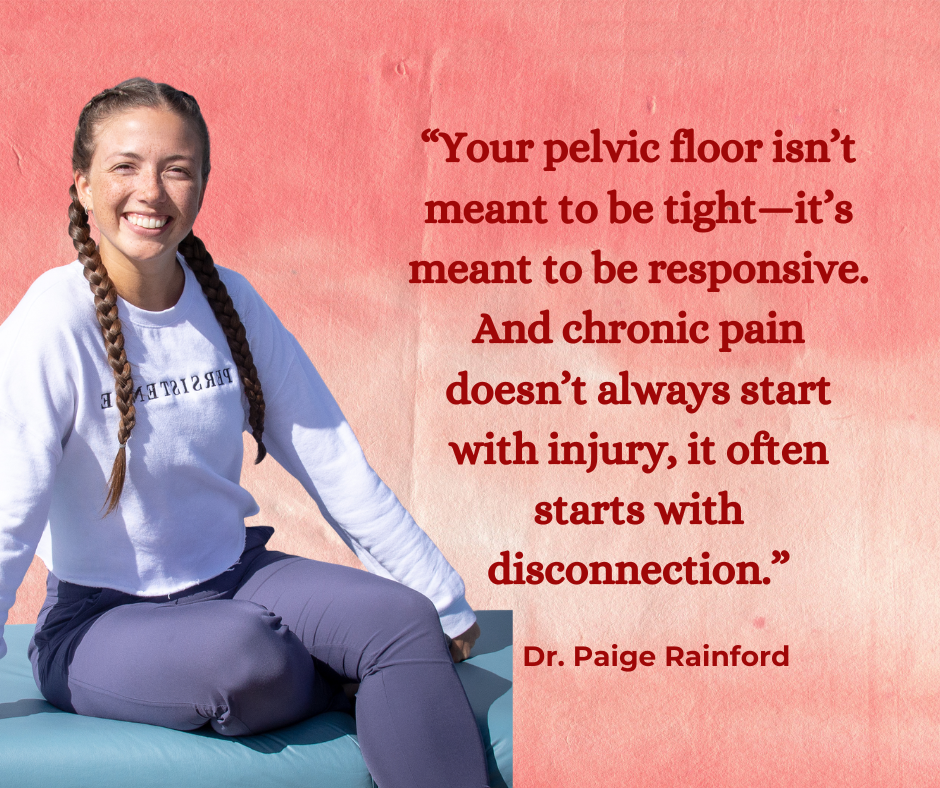
We go beyond just the anatomy to talk about how we’ve been conditioned to disconnect from our bodies especially as women (but we also talk about men and even children) and how that disconnection shows up as pain, dysfunction, and symptoms we’ve been told are “normal.”
What You’ll Learn in This Episode:
Why the pelvic floor is essential for everyday movement and long-term health
The truth behind common postpartum symptoms like urinary leakage
Why Kegels aren’t always the answer (and can sometimes make things worse)
How tightness is not the goal—and what to aim for instead
The role of the pelvic floor in bowel health, intimacy, and overall well-being
How stress, inflammation, and chronic pain are deeply connected to body awareness
Simple ways to begin reconnecting with your body today
Dr. Paige talks about mindful movement, bringing intentional awareness into everyday actions, not just your workouts. Because healing isn’t something that happens in isolated moments… it’s something that’s built into how we live.
A Bigger Message
At its core, this episode is about more than pelvic health.
It’s about reclaiming your relationship with your body.
It’s about questioning what you’ve been told is “just the way it is.”
And it’s about recognizing that your body has always been communicating with you—you just may not have been taught how to listen.
Connect with Paige:
Website: https://persistenceprojectphysicaltherapy.com/
Instagram @dr.paigerainford
Book Reference: Wild Feminine by Tami Lynn Kent
About Paige: Dr. Paige Rainford is an orthopedic and pelvic health physical therapist and founder of The Persistence Project. She earned her Doctorate in Physical Therapy from Husson University in Bangor, Maine, and completed her orthopedic residency at the Cincinnati VA. Dr. Paige helps active individuals move with confidence, build resilience, and persist through every stage of life.
-
Thanks for tuning in to redefinance. I would love it if you could share, review, comment, or subscribe to this podcast on whichever platform that you are listening to it on, so other people can also find it who might have similar interest that you might have and why you can add it. And if you guys have something that you'd like me to talk about, or you'd like me to invite on certain guests to talk about topics that are making inspiring, I would love to hear about that as well. Hopefully creating a more solid foundation for the type of content that I offer. I also want to share that I have an Instagram and a website for the podcast.com is the website. And we also have our own social media account on Instagram. It's at redefining underscore us underscore pod. So hopefully that's easy to find. And once again, I really appreciate that you continue to listen and come back every week. We also have a newsletter. So if you want to keep informed of all the new things that are going on in the Redefining Us world, I encourage you to subscribe. Welcome, Dr. Paige Ranford. Thank you so much for being on Redefining Us. Speaker 1: 01:28 I'm so excited to be here and to chat about pelvic floor and all that fun stuff with your audience today. Speaker: 01:36 Yeah, I would love for you to share what is unique about the way that you work with the pelvic floor when you have a patient come in. Speaker 1: 01:45 Yeah, I like to spend a lot of time uh around kind of talking about what the pelvic floor is and then how we can connect to this area of our body. So often, especially as we're raised, we don't talk about that area. It's not necessarily in uh textbooks either in anatomy, which is wild. So really learning how to connect to it and then how it can actually help us move throughout our lives and help us overall well-being. Speaker: 02:14 Yeah, I don't think I even knew that the pelvic floor existed until I was seeing like these videos about people who are pregnant. But yeah, I imagine that you really need it for any sort of like core stability because it's part of that area of your body, basically. So absolutely. Yeah. Speaker 1: 02:35 I love that you kind of brought up the core too, because this is another term that we have that's a lot of misconception, something that even I was not fully aware of the extent of our core going into my postdoc residency, where my supervisor like described to the core, and is something that has just blown my mind ever since. And I love to share it with everybody. So you want to dive into what the core is, and then we can get to the deeper stuff. Cool. So the core by definition actually includes any muscle that attaches to our spine, ribs, or pelvis. So it includes our neck, our shoulders, hips, everything. But what is Stephanie? What's your understanding of what the core's purpose is? Speaker: 03:24 To stabilize like the body. And I've been to a lot of PTs, so that's like what they've told me. So that's what I am uh inferring from. Speaker 1: 03:35 I love it. That's what most people say. That's actually a byproduct of what its actual purpose is. So our body is always changing in pressure. So every time we breathe, swallow, eat, go to the bathroom, pressure is changing within our abdomen. So managing pressure is actually the purpose of our core. So a lot of pelvic chlorpts will kind of bring in the soda can analogy where you can visualize how there's like a popped-up part in the front, on the bottom, it pops in, and then in the middle has to be managed as well. Otherwise, it will explode. And that just creates a mess. Same with our bodies. Uh, but in this concept, we think of all the muscles that we know about on the outside, uh, but also the parts that keep all of that pressure in are our vocal cords, our diaphragm, and our pelvic floor. Okay. Which is wild. Speaker: 04:30 Yeah. For sure. And again, I feel like something that probably most people don't know about. I I'm kind of curious, like when you work with people on their pelvic floor and you do this education, does like having that awareness help them be able to help regulate the pressure that is pressure regulation that's needed? Speaker 1: 04:53 I would say so. Um I think one of the most common things that we notice with poor pressure control is if your belly ever like tense up, it's called doming. And that's because we're not able to manage the pressure. So anytime it increases, like if we go to like sit up from laying down, it has to go somewhere. So it pushes out through those abdominal muscles. But having that awareness of what it is and why it's happening can help improve how you move throughout your life. I created a whole program called Mindful Movement. And so that's just bringing intentionality to all movement and not just what we think of like yoga is a lot of intention and like recash into the body. But if we can utilize that throughout our entire day in our lives, then it decreases our injury risk and improves how we're moving, like the quality of it. Speaker: 05:49 I imagine, and I'm gonna speak for the general public here. Most people are just like moving throughout the day without thinking about the way that their body is in time and space, right? I I would imagine when we first learn to walk, there's maybe like some awareness because we're always trying to focus on like balancing. Like I watch my toddler kind of like toddle around, and I feel like she probably has more awareness of where her body is sometimes in time and space than I do. She doesn't not aware of other people's bodies, but she's aware of like where her body is. But I think we probably lose that over time, like this connection that we have, because I'm gonna guess that there's so much noise and other things that our brains are like taught to think about, that we lose connection with the way that our body is moving through space and way that our body feels. Speaker 1: 06:41 Absolutely. I would totally agree with that. There's just all this external stuff that is happening all the time that we have to take care of that we kind of forget that we have to take care of ourselves so we can keep doing this other thing, these other tasks, which is kind of like ties into like I can tie it back to the pelvic floor here. So you brought up your toddler. So, like, usually you go through pregnancy and you're doted on as the mother to be, and it's awesome. And then you have a baby and you kind of forget about yourself. So when that happens to you, your pelvic floor has now been through a lot. It's done its job, but now it's gonna come back together, but we're no longer focused on how the body's doing anymore. But you're taking care of an infant. Um, and if you have other children, then you're also taking care of them on top of all your usual chores. So bringing in that awareness, especially postpartum, can be so powerful to avoid that urinary leakage that we've been told by society is normal after having kids, but it's actually not, and it's actually becoming even more prevalent in people who have not had children. So that is a pressure issue in itself. Speaker: 07:53 Yeah. I think we need to maybe replace the word normal with it's common, but it's not a normal level of functioning. Like that's not what you should expect for yourself long term. It's common to occur. But if you want to get back to like, you know, functioning and be out of dysfunction, like leakage is not functional. Speaker 1: 08:15 Absolutely. Some of my favorite clients that I've worked with have been women in their later years, so like 60 plus, and they have been leaking urine for 30 plus years, and they were just told that this was normal and that they may have to have surgery if they want to fix it. And I was able to work with them, reconnect to their pelvic floor and understand how it moves, the full range of motion, and they stopped wetting their pants after 30 years of doing this. So I think that's the most powerful part of understanding how our body works because it's not something we're taught. Yeah. I had to take another whole course to learn it specifically about this area. Like it's wild. Speaker: 08:57 Yeah. Yeah. I'm kind of curious if you could share what are some practices that maybe people can do or that you teach people to do that have to do with like the mental aspect of connecting with your pelvic floor. Speaker 1: 09:12 Yeah, I love to do visualization. So even before we dive into like feeling the pelvic floor, just kind of closing your eyes. And maybe you need to use your hand to kind of feel like pubic bone. So that's like right on top, and then you know where your tailbone is. But try to visualize and feel those muscles in there. Maybe you don't feel anything at all. That's okay. It's be that's quite common, unless you've done some pelvic floor work. And then another way that you can increase your awareness of this area of your body is if you have like a a face cloth, like a small washcloth, and you fold that up and then you sit on it and you lean forward. Everywhere that this cloth is touching that you can feel is your pelvic floor. So you can kind of like push into the cloth, you can lift up away from the cloth. Just kind of get a feel of what those muscles are and how they move. Speaker: 10:13 Yeah. So it sounds like just kind of building awareness is really the the first step of actually like strengthening and repairing. Speaker 1: 10:22 Absolutely. And it's funny because I know that kegels are a very common term thrown around about pelvic floor therapy, but it's not always our direction of intercourse or treatment. I've had a few people come in to see me and they're like, oh, well, I've been doing kegels, and it's not helping. Uh, oftentimes, due to the stress and external factors in our worlds, our pelvic floors are actually tight. And if we do kegels correctly or incorrectly, they're not gonna help that tightness. So we actually need to learn to lengthen before we strengthen. Speaker: 10:58 It's so interesting, and this might be a little TMI of what I'm about to like go into potentially, but I'm thinking to myself, like I feel like most people think like, oh, a tight vaginal wall is like what I want for myself, right? And so that's probably what leads them to do more kegels than is like necessary or helpful is the better word to use. Like, yeah, what is maybe the way that we should think about how we want our pelvic floor to be in order for it to be healthy, rather than to think about it as wanting it like tight? Speaker 1: 11:37 I love that question. Hadn't thought about it that in a way, and I love it. Um so I would say you can think of your pelvic floor just like any other muscle in your body, it just moves differently. So if you were thinking like, yeah, I need to be as tight as possible, think of your visa being super tight and you can't straighten your arm. How is that functional? But also having that tightness of the pelvic floor could make intimacy very uncomfortable. Um so then what is the purpose of having a tight vaginal wall if you're not even able to enjoy it? Exactly. Speaker: 12:16 I just think society has like perpetuated this word of tightness. And it's really not actually helpful for women to be focused on that. Speaker 1: 12:25 Yeah, I would say don't think of tightness. Think of your control of those muscles and what you could do while you're with your partner in that way, because that's pretty exciting. And then you have like kind of you have more control, which is also empowering in situations like that. Speaker: 12:42 Yeah. Yeah. It's like both awareness and control. Well, I imagine if you have awareness, then that would lead to you feeling like you have more like control over the way that your vaginal wall is like responding to different activities. Speaker 1: 12:57 Absolutely. It's interesting. And also, so when I first got certified for pelvic floor therapy, something that really helped me understand like the importance of being able to push out, everybody thinks of elevating your pelvic floor as the main purpose of our pelvic floor, but it's not being able to push out helps us with giving birth vaginally. But also, if you use tampons or diva cups or discs or anything like that, I don't know about you, but when I was using those, like especially tampons, when I just rip them out. And it sometimes it would hurt, it would be really uncomfortable. I would avoid having to change my tampon because that felt uncomfortable because I had no idea how to move those muscles. Being able to bulge my pelvic floor allows everything to loosen, and then every like you can pull out the tampon or the diva cup or disc, and it's much more comfortable. We're already going through it with menstruation. We don't need to make it worse. Speaker: 14:01 Yeah. Yeah, something that came to my mind while you're saying this, and again, I may be getting a little too nitty-gritty for the average listener, but I'm thinking to myself, like, man, I imagine having pelvic floor awareness also helps with like defecation and like potentially avoidance of things like hemorrhoids, which no one wants. So yeah, I was hoping that you can maybe speak to that a little bit. Speaker 1: 14:25 Absolutely. Um, yeah, we would think of pelvic floor therapy, we think of women's health, which is primarily around, you know, pregnancy, postpartum, that type of thing. Um, but it does include bowel movements. So going back to pelvic floor awareness and cagles, I would say it's quite common that we have awareness and contraction of our pelvic floor around the anal opening, but not around the vaginal opening. Because that's what I had when I went through the course. I was like, wait, I have no problems, but I don't know how to move it. That's weird. But that being said, if there's a lot of tightness around the anal opening, then it makes it very difficult to have a bowel movement. But then we also can kind of get into this real mobilization, like bowel massage. I don't know if you've ever heard of that. You probably did it with your babies without even realizing what you were doing when they're constipated and you move their legs up and around. You can do the same thing with yourself. I mean, not necessarily with your legs, but massaging, kind of pushing the intestines so that they mobilize. Uh, when we're constipated, it's typically means there's not enough hydration. So then those muscles are stiff. Wow. So then if you can help move them externally while you're hydrating, and then also trying to relax the pelvic floor can help you pass a bottle movement a lot easier. Speaker: 15:54 Yeah. I think this is helpful like during pregnancy, postpartum, and just like your average day-to-day life. Like I know constipation is a common complaint for people who are pregnant, and that definitely probably continues into postpartum for most people. I was joking with my gynecologist about my first ball movement after birth. And she's like, Oh yeah, you'll always remember that one. And I was like, Yeah, I think I'll always remember that one. But in my mind, I was like, now that we're having this conversation, I'm thinking, like, maybe there was more that I could have done to prep for that. So it wasn't as quote unquote rememberable. Like I'm thinking, like maybe there was some leg movements or massage that I could have done to help myself rather than just believing this is like an inevitable torture that you have to go through. Speaker 1: 16:45 Oh my gosh, that sounds awful. But yeah, I think there's always a way to prep. It's like prepping to give birth to try to avoid tearing. I don't, I could be a little behind on research, but I don't know that there's definitely definite research to say that doing pelvic floor therapy and all this stuff beforehand decreases tearing. Um, but I would say learning how the pelvic floor moves can help you a lot when you're trying to push, especially if you're pushing for a long time. You get very tired. So practicing beforehand can be really helpful. Uh I want to circle back to hemorrhoids that you mentioned earlier. I know that that's something else that's been considered normal after pregnancy. But I also believe that there could be a way to avoid it. I've been reading a book by another pelvic floor PT. It's called Wild Feminine. I'm not sure if you've heard of that. Uh Tammy Lynn Kent looked it up so I could tell you that. Um, but it's a lot about energetics and visualization of your pelvic floor. And she talks about hemorrhage as a kind of like anger almost or resentment or fear coming out externally. I also like to think of like energetics and how our mind impacts our physical body and how it works. So I thought that was really interesting because it also feels that way when you have them and you're trying to have a bowel movement. Speaker: 18:17 Yes, I imagine it's probably a lot of like frustration and anger when you're trying to move your balls and have the hemorrhoid at the same time. Speaker 1: 18:26 Yes. I can only imagine. Yeah. Speaker: 18:30 Yes. I I think that in general, like, you know, our bodies really connected to our mind and just having like more and more awareness of like these muscles and the way to move them, hopefully we'll just help people decrease the inflammation that we experience in different areas. Mm-hmm. Speaker 1: 18:50 Definitely the hope. Inflammation is cause well, it causes so much discomfort in our bodies. And I I like to think that it's mostly associated with like negative thought patterns that we're experiencing or the external inputs that we're getting. And we're just kind of physically responding to it in the form of inflammation. Speaker: 19:11 Yeah. How often do you think people should be thinking about working on their awareness of their pelvic floor? Because you know, I'm sure you know people have lots of things that to be working on probably all the time. And as a pelvic floor therapist, you'll probably like, people should be thinking about this all the time. And I think the same thing about mental health. But like, I think my question is like, what would be a good practice for a beginner to get into? Is it like two minutes a day? Is it once a week? Like, what do you think is realistic for most people to really start building up their awareness around the pelvic floor? Speaker 1: 19:48 I think that's such a good question. I'm my own worst patient. So as you're asking this question, I'm like, what do I do? I want everybody to be aware of it, but I'm also not very good at it. I would say I like to have it stacked. So anytime you're already doing something, to then take a moment and think about your pelvic floor. So that's a hard one because an easiest one would be like on the toilet, but that actually puts a lot of stress on your pelvic floor to be in that position. So maybe after going to the bathroom when you go to sit back down, take a moment to just kind of like think about how things are feeling down there. Um, see if you can visualize the muscles in the air the pelvic bowl. The time that I think about it the most is actually when I'm menstruating because I've got I use a diva cup, so kind of like thinking about how I'm going to position this today or like each time, I feel like it changes every time. Um but then I just spend a little bit more time of like fully relaxing and then allowing it to go back to neutral. Speaker: 20:55 Yeah. I think even just knowing that we all have pelvic bowls is important too. Like what makes that up. I when I was pregnant, I went to this uh pelvic floor class and she showed us what is all like encompassing, like with a model. I was like, oh my goodness. Again, like thinking to myself, I am 34 years old, and I don't think anyone has ever told me about this pelvic bowl. So I'm curious if you can maybe share with people, like and help them visualize what that might look like. Speaker 1: 21:27 Absolutely. The models are the easiest way to understand, but we can kind of describe it as well, we talked about the can. So if you think of a bowl, that's where the pelvic floor is, but it kind of goes up into the hips, the ischial tuberosities and to the iliac crest, that's the pelvis. So then it kind of comes that whole area, and then the pelvic floor muscles that we think of the most are at the base. But that being said, you can also see some hip muscles that are. Not part of the pelvic floor, but they're adjacent and they have an impact as well as the muscles up our back. So I got into pelvic floor therapy because I swore I would never get that intimate with my clients because I was frustrated that I wasn't able to really help somebody who had had chronic low back pain or hip pain. I felt that I was missing something, nothing was working. Learning about the pelvic floor and how close those muscles are to the pelvic floor muscles and how they all kind of work together has changed how I treat people with low back and hip pain, which just kind of blows my mind. And anytime I bring out a model, I like to highlight that those back muscles would connect to your pelvis and then the hip muscles do too. Um so it kind of further emphasizes that everybody has a pelvic floor and that it does impact you day to day, whether you're aware of it or not. Speaker: 23:02 Yeah. For sure. Yeah, most people listening to this podcast are women, but men also have pelvic floors and it's important for them to know that. I think that they're like, oh, that's something my wife has to worry about, or something my partner has to worry about. They're like, no, you also have a pelvic floor, and you should try to tune into that if you don't want to experience like hip and back pain, because again, most men I imagine, especially ones that like work out or are on the feet all the time or lifting things improperly, like are gonna end up with low back pain. Speaker 1: 23:34 Absolutely. Or even to go back to traditional things that you think of pelvic floor. I had a gentleman come see me for an ankle problem and he laid down on the table, and I was like, you don't know how to manage your pressure. And then it turns out that they've bele like believed that he's had a small bladder his entire life. Well, we really should work on your pelvic floor. Speaker: 23:58 It's interesting, these like things that we pick up. Like I I don't know the science behind this, but I'd imagine like most of our organs are like proportional to the size that we are. So this idea that you just like inherently have a small bladder seems kind of silly to me. Like I imagine his bladder is probably proportionate to the rest of his organs. Speaker 1: 24:21 100%. Uh well, um to stick on the bladder thing. We have a whole nervous system around our bladder that can be trained. So it could happen as early as like potty training of being told to like go to the bathroom anytime you have to, or go in before you leave the house and stuff like that. That's training the bladder to need to empty at a quicker rate than it actually needs to. So I it's possible that this was kind of ingrained at a young age and he just couldn't ever get out of it because he didn't understand it. Yeah. Speaker: 24:54 Speaking of potty training, because I think that's a great topic, because this doesn't impact just adults, right? Right. Like there's children who probably have pelvic floor concerns that well, one, maybe they're harder to potty train, quote unquote, harder. What does that mean? They might end up wetting the bed. I'm sure there's lots of things that would indicate a child potentially needs pelvic floor awareness and maybe even like physical therapy. So I was hoping maybe you could share what you know. I know that's not your specialty, but it kind of came up. So my brain is like, oh, maybe if people listening just hurt a little bit, they might be like, oh, this is something I should look into for my child. Speaker 1: 25:34 Yeah, absolutely. Definitely not my area of expertise, but I've been seeing more and more pelvic floor therapists asking about pediatrics, which is interesting because we like to believe that kids are just like they're perfect little bounce balls and they just go through life and they're fine until they're adults. Um, but actually, just like you said, if they wet the bed, if they're constipated or they have diarrhea all the time, those are signs that their pelvic floors are not necessarily working well. And there's could be so many reasons as to why that's happening. But if you can address it when they're young, it makes it a whole lot easier. Um, especially for little girls who then start menstruating when they're in teenagers and but they don't understand what's happening and they don't understand, you know, like I said about the tampons, like if they have a greater understanding at an earlier age, I think it makes them a lot healthier and more empowered to to like advocate for themselves of what they're experiencing. Yeah, for sure. Speaker: 26:31 Yeah. So well, I wanna well, first of all, thank you for sharing what you've shared. I feel like there's a lot of good information for people to really be thinking about and try to connect with their own pelvic floor, maybe help their children connect with their pelvic floor. Yeah, I I think I don't know, my brain's kind of going back to connecting your mind with your body and just this like constant what is the word, like dismissal that I think people get in the practice of of ignoring their physical cues. Yeah. And so, yeah, but think as a general theme here, it sounds like your main message is like getting back in touch with those cues and to not dismiss or ignore discomfort or you know, yeah, other sensations. Yeah, I don't know if you want to speak more to that as I'm just rambling on here. Speaker 1: 27:23 I love that. That's 100% of like what I love to teach other people is having a connection to ourselves is our greatest superpower. Um we've I showed this at another speaking event I did, and it was like we're pros at ignoring what our body's telling us, and then we wonder why we have chronic pain or we have inflammation. There's a chronic pain cycle, and we like to think that everything is linear even though we know it's not, but sometimes it's also circular. So I like to highlight too that chronic pain is a cycle, and it actually often doesn't even start with an injury. It's usually with high stress or not sleeping well and things like that that are happening to us that then change how we're connected to ourselves that lead to an injury, that then we then perpetuate the pain and agony and then the continued stressors that we have in our lives that keep that pain there longer. So if we learn to connect to ourselves when we're not feeling pain, that can save us so much time and money on trying to get rid of pain. Yeah, for sure, for sure. Speaker: 28:35 Well, yeah, if you could share with people how to connect with you, if they want to work with you or follow you on social media, I'd love for you to share with everyone where they can find you. Speaker 1: 28:45 Absolutely. I am on Instagram the most at Dr DR period paige rainford. And then my website is drpaigeranford.com. And you can kind of read a little bit more about my story and my mission with the Persistence Project. I'd love to help anybody reconnect to their body. Um thank you so much for having me. This was so fun. Speaker: 29:08 Yes, thank you for coming on. I hope it sparks a lot of thoughts and inquiries for people. And yeah, I I think in general, really being connected with ourselves is like the first step to healing in a multitude of ways, but especially with the public floor, I think is really important. So thank you. Thanks for tuning in to Redefining Us. I would love it if you could share, review, comment, or subscribe to this podcast on whichever platform that you are listening to it on, so other people can also find it who might have similar interests that you might have and why you tuned everything. And if you guys have something that you'd like me to talk about or you'd like me to invite on certain guests to talk about topics that are unique and inspiring, I would love to hear about that as well. Hopefully creating a more solid foundation for the type of content that I offer. I also want to share that I have an Instagram and a website for the podcast. Redefininguspod.com is the website. And we also have our own social media now on Instagram. It's at redefining underscore us underscore pod. So hopefully that's easy to find. And once again, I really appreciate that you continue to listen and come back every week. We also have a newsletter, so if you want to keep informed of all the new things that are going on in the redefining us world, I encourage you to subscribe.