Episode 33: How Craniosacral Therapy Supports Parents and Kids with Lisa Foster
True support is not always loud or forceful. Sometimes it is gentle, patient work that helps the body feel safe enough to let go.
In this episode, Stephanie sits down with craniosacral therapist and pediatric physical therapist Lisa Foster to explore how her approach to care shifted from traditional physical therapy to a softer, nervous-system-centered practice.
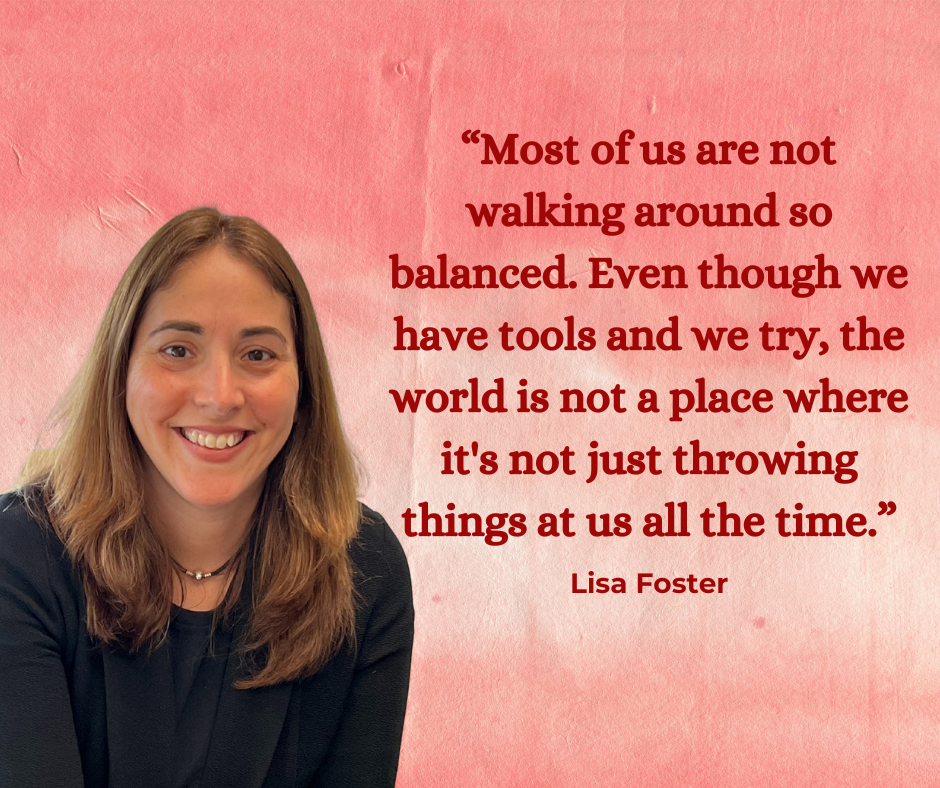
Lisa shares how craniosacral therapy helps infants, children, and adults release tension, regulate more easily, and reconnect with their bodies. She and Stephanie talk about why so many kids are misunderstood as “behavior problems” when their nervous systems are simply overwhelmed, and how birth experiences, stress, and unprocessed emotions often show up physically long after the moment has passed.
They also discuss how this work shaped Lisa’s parenting, from letting go of perfection to trusting her children’s natural rhythms. This conversation offers a grounded look at regulation, connection, and the small shifts that help families feel more supported.
-
This is Redefining Us, and I'm your host, Stephanie konter O'hara, licensed professional counselor. And I'm so glad that you joined us today so we can dive into what it means to be a woman in today's society. Figuring out how we balance everything, how we grow, how we be more authentically us, and figuring out who we are through the transitions of life, whether that be motherhood, success, relationships, and all things that happen in women's lives because it's definitely not a linear journey. And I think by talking about it and normalizing it and validating, we can all arise together and be the women that we were meant to be. So keep tuning in, and I am so excited about joining the conversation and being in your ears each week. Let's get into it. In today's episode, we're going to talk to Lisa Foster, who is also a podcaster and host of Real Life Moms with a Z podcast. She's also a certified cranial sacral therapist and licensed physical therapist who understands the struggle of trying to balance career and family. And she's really passionate about helping other moms prioritize their overall health and well-being. And I'm so excited for you to listen to today. She shares a lot of how she decided to create this podcast, what the overall goal is, as well as the work that she does with infants and why it's so important to her to keep doing this work. Welcome back to Redefining Us. I'm your host, Stephanie Controjara. And today I have with me Lisa Foster. I'm so excited that you're here today, Lisa. Sounds like you have a lot of things that you're doing and that you're driven to do. So I'm happy to have you here.
Thank you. Well, thank you for inviting me. I'm excited. I just listened to your podcast on my walk this morning. So I'm excited to be on it. Awesome.
Yeah, I have only been doing this for a year, but you've been doing your podcast for four years. Yeah, I'd love to kind of maybe just even start there sharing about your podcast, like what's its mission and how you came about to be a podcaster.
Yeah, it's a funny thing. Okay. Because I am, if people know me as like, I can't even turn on a computer. I'm happy to get on with you today on Zoom, right? Because I had just a fear of all that technology. So being a podcaster just is so funny to me. But what happened really was honestly, in the pandemic, uh, my background is I'm a physical therapist by trade. I interned cranial sacral therapy, and that's a later story. However, I was working during the pandemic and we still had to come in. So when people were shutting down, they still had us coming in because I had infants that needed to be seen. We prioritize our patients. However, these new moms kept coming in and they were like, wow, you're the only like person we've seen, only mom I know. And that just broke my heart because first of all, I was like, look like one of those cartoon characters where I had the yellow gown and the shield and the glasses and all the masks and stuff. I mean, Gray's Anatomy, they make these things look great. I looked terrible in these things. However, I was like, you don't even see me. You don't even know who I am if I was walking on the street, let alone, you know, like nothing. And I was like, my mom friends, that's what got me through motherhood for sure. It was just those talks, the advice, you know, the experience. And so I was like, I need to do something. And somehow, you know, you get these little free, like, you know, come to this free podcasting, start your own podcasting. And it's a week long and it's an hour a day. And I was like, okay, let me do it. I have a lot of time with the pandemic, right? There's extra time. And so I started doing that. I was like, I'm gonna make a podcast. And there I went. I just threw it out there. And my goal initially was to help moms connect and just have another voice. But over four years, that changes. And what I realized, my real passion is to help moms themselves take care of themselves. So now it's all about carving out time for you and putting yourself on top of your to-do list. So that's kind of how it came about. And yeah, I'm loving it. I have these amazing conversations with people just like yourself every day. So it's so fun.
Yeah. Yeah. Something that I really love about podcasting is just getting to meet the people that I interview because everyone is so uniquely passionate about the thing that they're doing. And when I don't know, to me, when worlds seem stressful, getting to meet people who are just so deeply passionate about the work that they're doing every day. It's moving, I guess, and heartwarming to know that people are really in it to help others and in it to kind of share their message and share their hope or share their stories with other people. So yeah, that's one of the reasons why I love being a podcaster, at least.
Totally. And in a world that we don't get to connect as much, right? We're busy, we're doing short little texts back and forth. We're not having real conversations anymore with people. It's like having 40 minutes to sit down, even if it's a total stranger, because yeah, we haven't met before. And then you leave that conversation feeling so fulfilled. And I really feel like I get to know the person. I mean, this intimate place. And it's so nice. So yeah, I love it too.
Yeah. It's like really cutting out the like, let's talk about the weather. And we get deep into like, what are you really passionate about? And I uh yeah, I just love that energy.
Yeah, and nobody asks me what I'm passionate about. Like if I'm just like in the office or school, you know, or wherever, it's like no one's asking me what I want, what I'm passionate about. Like, tell me about you. Like, no one does that, right? But on these podcasts, they do. So it's amazing.
Yeah. So I guess what kind of inspired you to move from physical therapy to being a cranial sacral therapist? Because I know physical therapy as a whole has probably a lot of options to go into to really specialize and niche down. So, what kind of drove you to work with infants um doing this work?
Yeah. So what happened for me is like, I think I grew up in a place where it's like you have a job, right? You're graduate school, you're supposed to get a job, and you stay there for the rest of your life. You don't change, there's no redefinition. So I love your podcast because I was like, what? Redefining us? That's like a thing. And so, yeah, you're supposed to have your pension when you graduate, your 401k, all those amazing things that don't actually happen anymore because a lot of places aren't even doing those, right? So for me, I was in that traditional PT setting. I was in the pediatric department, which I I honestly love PEDs. It's kind of a warm spot in my heart. And at the time I was working a lot with kids that had autism or were somewhere on the spectrum. And as a PT, you know, we do motor skills. And I was getting nowhere and nowhere fast. Like I was just like, okay, what am I even doing? And then I had a colleague who was getting amazing results. He was like, these kids were relaxing on the table. I'm sweating and running around trying to get things done here. And he's like, calm, relaxing. Kids are on the table, and these kids don't even sit still. I get they're laying down. And his changes were amazing. And it wasn't even just motor skills, it was, you know, their speech and language development, their behavior and connection, things that really matter a lot, along with the motor skills. And I just looked over and I was like, wait a minute, what are you doing? Because I'm obviously not doing that. And he told me about cranial sacral therapy. And honestly, I was a little skeptical. I'm originally from New York, live in Colorado now. And as a New Yorker, I feel like I have this innate sense of being like, really, like, I don't believe you, kind of thing. That's like my first reaction. And watching it, if you've ever watched cranial sacral, it's just really gentle. It's just the weight of your hands. So it's like on your head, on your cranium, on your chest, just the weight. So from the outside, it looks like paint is drying, like there's nothing going on. I was like, how is this even happening? But I was so curious. I said, okay, let me take one class. I'm gonna take a class, still very skeptical. And while I was in that class, my eyes totally open up. It was the first time that I can feel something that's really going on in the body. So it looks quiet on the outside, but on the inside, when you're really feeling it, it's like magical. There's so much going on in our bodies. And I was like, wow, this is the first time like I can't actually see the thing, but I know it's there. And it just changed my life, really. It taught me to trust and to not judge and to be curious. And so it was like this whole shift in my life as well as in my practice. And so I started just saying, okay, wait a minute, this is what I want to do. And just slowly but surely, I just kind of weaved my way out into my own private practice. And now I treat infants all the way through seniors, and I'm in something that I love. And no, it doesn't have a 401k attached to it or healthcare for that matter, but I do go to work every day and I'm really, really happy and I'm enjoying my life. And, you know, flash forward, the pediatric department that I worked for in a hospital that was totally set also collapsed and closed. So nothing is really that reliable when you think about it.
Yeah, I don't know if this is true or accurate, but I'm kind of getting the sense that this type of therapy is unique in that you almost move from trying to do exercises to help clients more like be and be still and like having the healing touch sort of energy to it. Yeah, it's kind of taking the busyness out of doing physical therapy into the maybe more like I'm thinking like the parasympathetic nervous system to really calm the body and help patients get into this space where they can, I don't know, have more flexibility because they're resting. I don't know if that's what you're saying, but that's what I'm kind of like interpreting from.
It's exactly, it's going from this feeling of like, especially as a therapist, I need to fix someone, you know, and that's what PT's all about. I gotta fix it, I have to have all the answers, which is really stressful. And sometimes you feel like when you're giving answers, because no one's a mind reader here, right? Like, I don't know how long it's gonna take for you to get better or if you will. I mean, that's the honest truth, right? But we're gonna try our best. But cranial sacral therapy moves to more of that the client comes in with everything they need and all their answers, and that the body itself wants to heal, it knows how to heal. And we think about if you get a cut, you do nothing, it just heals, right? But sometimes that cut's too big and you need a bandage, you need support, you need stitches, right? The cranial sacral therapists are those stitches, uh it's the support that the body needs to then do the magic. So it's going from more of I need to fix you to I need to listen, support, and hold and guide you with what you already have and know and what you're coming in with. And that brings the power back to the patient. You know, I can't do my work without you. So it's it's really empowering. Whereas PT or some of the other chiropractic, whatever, it's like we come in, you know, fix me, you know, and it's not a fix me. It's like you have it, this is all your work. I'm just here to support that system and help you.
Yeah. It's very client-centered sounding. And if I already put therapy words to it, like very human, like collaborative, guiding, gentle, like client-centered work to help restore the somatic intuition of the body knowing how to heal itself.
Yeah, that's exactly that's exactly what it is. That's exactly what we're doing. Which for me as a therapist, it just feels so good to not have that kind of responsibility to feel like I have to know all the answers. And that for me just felt like this weight lifted off my shoulders. And now I can enjoy because unattached to the outcome. Of course, like we want our clients to feel better. I'm on their side, but I also know it's not just my responsibility, it's theirs too. And it really feels really good.
Yeah, it sounds like a completely different philosophy of caring for the patient than what maybe like traditional physical therapy has as the philosophy.
Totally. Yeah. I mean, PT is like you go, you come in and I assess, I give you exercises, and here's the deal, right? Like, not everyone does them. So you don't even know if what you're giving is appropriate or not. Because if you're not gonna do the homework, then how do we know it's working? Right. So that it does take a team approach, but with cranial, we're working together right then and there. So we know if it's working or not, you know, because if you get up and you feel better, yeah, those are changes. And cranial also works on a very different level, too. We're working at the nervous system level, which you had mentioned, right? The parasympathetic, that resting level. But it's more than that. It's thinking of you know, our nervous system is our core system of our body. And if it's balanced, then all other systems can work better, right? So the goal is to kind of feel where there's tension along the structures that surround the nervous system and within the nervous system. And we're really releasing those things so that it can rebalance and find a better place. And so that's why it feels so relaxing because most people are coming in with a nervous system that's somehow more in that fight or flight than in that rest or digest. Um, and most of us are not walking around so balanced, even though we have tools and we try, but the world as it's, you know, is around us is not a place where it's not just throwing things at us all the time. So we tend to get triggered, we tend to heighten up. And so by balancing this, yes, it's going to release, um, let all other systems work better. That can improve our health, that can make us relax, but it also gives us more resources in our body if we're all wound up tight and then that one thing throws at us, boom, we're gonna trigger, right? Because we're already wound up. Where there's no more room in my body to put it somewhere else. And so here I am. I'm just blowing up, or oh, all of a sudden I have terrible headaches or back pain, or oh, my digestion is off, right? Like there's just no more resources for our body to function. I mean, the goal is that our body wants to continue to survive at all costs, you know, it's gonna keep moving forward, and it doesn't matter what it has to do until it can't.
Yeah. This is kind of reminded me of another conversation I had with uh another person on the podcast. Her name is Dr. Britta. She's also a pediatric physical therapist, and she was mentioning that a lot of the work that she does, which sounds kind of similar to you, and but maybe you can help me maybe understand if there's much of a difference. But it sounds like you're you're kind of on the same team here, where it's like you want the patient to come in so you can help them have a better overall life, right? Because she mentioned something like a happy baby is like a well baby. So if maybe going back to the kids that you mentioned, they're just like running around and having these behavioral issues could be because their nervous system is out of whack. And what they need is more balance and space, time to, I guess, quote unquote, be calm, as much as a small child can be calm. But yeah, you're like guiding them to the more of like that place where I think there's also obviously a place for traditional physical therapy where you're working on maybe being quote unquote strong, right? And gaining skills to do movements where like what you're doing is again helping a child or an infant feel like they're, yeah, and their nervous system is regulated and that they're safe and can be calm. I don't know if that went conceptualized.
Yeah. I I think what I want to say is like, yeah, to feel better in their body, right? So what always upsets me the most is when I hear that kids, maybe not babies, but kids that are in school and they're the ones getting in trouble and they're labeled as the troublemaker. They're not paying attention, and they're just labeled as bad kids. And I see a lot of these kids because they're like, parents are just like anything, let's try anything. Like we've done medication, we've done therapy, let's try something else. And what I see with these kids is like I'll feel their system, and a lot of times their membrane around their brain, around their spine is so tight. There is no room, there's so much compression, and there's so much noise already going on inside that who can listen to anything outside, right? If you have a nervous system that is just loud because it's not regulated, it's hard to pay attention. That's like me being inside your head, singing the ABCs while dancing around in your body, and then you're supposed to take notes off the board or listen to the teacher. Like, who can do that? Right, even as parents, we've, you know, our kid is talking to us, our husband's talking to us. We're like, you know, it's like and I have a regulated nervous system. It's just too much. And so what I find with those guys, it's like, yeah, it's not just about like, okay, I just want to relax and feel relaxed. I want to feel open enough to see what's around. I want to be open enough that I can hear what you're saying. I want to be open enough that if that kid just hits me by accident, I'm not already out of a reactive place because my nervous system is so high already that the only thing I know to do is protect and snap. I mean, that's what we're built for, right? So it always makes me feel so sad when these kids get labeled. Because honestly, they come into the office and they're like darling. They're not like, you know, defiant and like, no, I don't want to do this or yelling at me. They're not. And a lot of them are like, Can I have a pillow, please? You know, they're asking so nicely because we're in a quiet place. It's one on one. So it's not all this information and ruckus around us, you know, so they can actually be. And then having us release some of that tension that's just stored in their body for whatever reasons, you know, then they have so much more play. They can be happy. Yeah. You know, so yeah, I think that is one thing I I do love. And that's for anyone, you know, anyone adult, infant. I get a lot of infants too that um they are colicky. They're not sleeping. They, you know, they're crying all the time, you know. And sometimes the birthing process is tough. A lot of times the birthing process, have you seen a birthing process, right? It's it is tough. There's a lot of quote unquote little traumas that go on in there. It's not always so smooth. And even when it is, it's still sometimes really quick and the body doesn't catch up. And so sometimes even just having a session after, like, you know, within I see kids that are two weeks old and just unwinding some of that just tension, that initial tension in their body. Oh, they can sit in their car seat without yelling, they can they can sleep better. Now, granted, they're infants, they are waking up at night, people. I'm not, this is not magic, but they're just they feel less you know, tense and the parents notice that. And here's the deal we all regulate with each other, right? So mama's calm, but the baby's more calm. But mama's more calm. We are all connected, we hold each other's stuff all the time, subconsciously. So many times I'm treating an infant and the mom or dad is sitting there and they fall asleep. And it's because they're like, Oh God, it's so calm in here. And I was like, Well, actually, your baby's calm now. And that is why you're feeling it too. So when we're regulating our kids and we're holding our babies and we're, you know, getting anxious because they're yelling at us and we can't feed them or whatever else, guess what? Now their system's gonna be that way too because we're co-regulating each other.
Yeah. Yeah. I remember for myself when my baby was less than a year old, I found myself forcing quote unquote co-regulation. Like I would have to really bring myself in and take a lot of deep breaths. Just because as a therapist, I know that this is important from the basic skills that I've learned. But yeah, it wasn't this feeling of ease getting into the co-regulation for me. I had to prep myself a lot in order to do it. So yeah, it sounds like maybe there's people like you and that would be supportive in that process of helping the baby even like physically feel like they're not as wound up. I guess even for myself, I didn't think about even if your birth was quote unquote smooth and went according to plan, it still is a traumatic experience going from in the womb to out in the world. And yeah, if that transition happens quickly, which I'm assuming most women would prefer, it's still jarring to the infant.
Right, because you're going, and and a lot of us do birth in hospitals. I did. I mean, I had two C-sections because my kids did not come out. Um that's okay. But yeah, I mean, if you think about it, right? This nice little warm, loving place with a little heartbeat going on inside, and it's so lovely, and you get fed whenever you need, like it's just like this lovely environment to like, oh my god, being squished out this little tunnel, I'm probably getting stuck along the way. To now I'm out in the open and it's light, and there's tons of, you know, depending on how many people are in the room, more people than you were used to. And then they're sticking, you know, they're cutting things, they're they're sticking things up your nose and all necessary, but it's a lot, you know, it's just a lot. And the thing about infants is there's not a lot of stories in there, you know, they're new, so usually a session or two can do wonders because they don't have all these levels like we do as adults. Because here's the deal our emotions, our experiences, they get trapped in our tissue. So things that like I get people all the time that come in and they say, gosh, I talked about this. Why is it coming up in our session? I was like, No, this is good. You talked about it. I'm so glad you did all that therapy. However, sometimes it just doesn't release from the tissue itself, and that needs more help. And that can be cranial work, there's somatic work, there's a lot of other things people can do, but it does get trapped in there and it does cause some physical issues. Sometimes pain isn't actually, you know, a physical structural thing. Sometimes pain started because we had something happen to us and we stuffed it down and it's just stuck there, and now everything's kind of moving around it, but the real cause is still there.
Yeah, I guess this is making me kind of think too, like going back to the quote unquote theme of the podcast, like redefining this uh experience of where emotions are stored and where traumas are stored. And there's a variety of different ways to heal and different ways to feel more grounded and balanced, and the work that you do is in support of them.
Yeah, for sure. The goal is always for people to feel more themselves.
Mm-hmm. Well, yeah, I feel like a lot of people could use that resource just even thinking of like, oh man, there are so many moms that I knew that my baby just cries every time I put them in the car, or my baby is so colicky, or my toddler's freaming, and I don't know why. And all of those things obviously could be it for a variety of reasons, but going back to the idea of this all kind of originates in our body and in the tissue and in the nervous system and all of those things that are maybe unseen to the naked eye.
Yeah. I feel like we're all these little stories, you know, no matter if we're infants or adults or, you know, whatever age we are, it's like we have layers, and each layer has a story to it that makes us who we are, and that's great. And I feel like cranial sacral therapy is able to listen to all those stories and they start to unfold while you're on the table.
Yeah. So do you primarily work with children still since your backgrounds in pediatrics, or do you work with people all across the age spectrum?
I work with people all across the age spectrum. So I see, like I said, two eagles all the way to, I think my oldest is probably in their 80s, but you know, always open to going higher. I love, I love that older generation too, and that they're open to doing something different. But yeah, all ages. And I love having the variety too.
Well, yeah, because unfortunately, physical and emotional trauma and dysregulation happens at every age. Yeah, so true.
So true.
Yeah. So I guess I want to maybe gonna pivot here and talk about your own journey as a mom. Since I imagine like this is kind of maybe inspired some of the the work and the shifts in your own life. Like I imagine during the pandemic and just leave and switching careers that may have been different moments of redefining who you are and also maybe like your relationship as a parent. So yeah, maybe a big question. So feel free to just answer in a way that feels right to you.
Oh God, my parenting journey, right? Yeah, it's interesting because I do feel like I shifted with the work, honestly. So when I look back at initially as my motherhood when my kids were younger, I was definitely that person who had to have all the answers. I was that person who, you know, had that Mary Poppins like bag that had everything you needed. I'm telling you, if my kid was hungry, there was a snack, someone got hurt, I had the band-aid, like I had everything. And that made me feel like I was a good mom to be prepared for every single thing. And working in pediatrics, right? You think you know it all. Like I know everything because I've been doing this for so long. I know what I'm gonna do with my kids. But no, like we only have kids for one hour and sessions, right? And then they go home, and that's where the real stuff happens, right? And that's what you really need to work on. So definitely not prepared. But my Mary Poppins bag had it all. And then as you know, my kids got a little older and kindergarten, I started shifting into this cranial work. I started feeling a little bit more like I didn't need to have all the answers, right? And I started showing up a little bit more open and more willing to be like, I just don't know. And my son, especially, right? My my daughter was the kid that wanted to do everything, loved all the friends, you know, did all the things, right? So it was easy to do the right thing. Like I was in like participating and doing all the things, right? My son, on the other hand, was the exact opposite. And he was like, uh, I'm not gonna do that gymnastics class. I'm not gonna do, I'm not gonna do anything. In fact, I don't even want to hang out with anyone. Like he was a real introvert, and I was like, this looks bad. Like as a parent, I felt like I had to lie to people, like, no, he can't come today. We have something else, you know. Like, I was making up stuff. What is that? Like, you know, just because I was trying to fit into this box of like, you know, I'm supposed to have play dates. Well, he didn't want any. He wasn't a bad kid, he just didn't want any, you know. That's not who he was. He socialized at school and then he was done for the time he needed to recharge, which honestly looking back, I should have just listened to that because that's what his system needed, right? Then the pandemic hits right years later. And oh my god, what a life lesson. I'm the pandemic was not good for anyone, I'm sure it was awful. We all felt it. However, my son blossomed like nobody's business, he finally had no pressures of all the things that we're supposed to do, right? And I also felt less pressured to make him do those things. And what I realized by taking a time and taking pause, he grew into who he wanted to be, who he needed to be. And now I can't, he came out like he wanted to join the tennis team. He's got his buddies, but he also is really confident in himself, and it's all because I gave I honestly I think it's all because I gave him that space during the pandemic to become who he wanted to be without any judgment and without any pressure, and he ended up becoming amazing. So the journey was interesting, and I'm still learning because my kids are now, you know, one's still in high school and one just left for college. And yeah, there's always every phase has another, you know. What did they say? Every level has a new devil. That yeah, every level has a new devil.
Yeah, I had one mom tell me, like, bigger kids, bigger problems. And I was just like, I don't know. I feel like maybe it's just like a different way do you need to relate to them at each phase, right? Like what they need from you when they're an infant or toddler is different than what they need from you at like 10 or 12. And then again, you know, 15, 16, 18, 20, etc. But yeah, like redefining each phase of how you relate to them and how you show up for them and let them show up in whatever ways that they show up without feeling like you need to control it, I think is hard for a lot of people, including myself as a type A person. I'm like, oh, it needs to be this way. I'm like, okay, no, let's also use all the information that I've learned throughout the years. It doesn't need to be a specific way, but it is this internal discussion, I think, for probably a lot of people, including myself.
Yeah, and I think a big word is gonna be trust because we have to trust our kids, you know, like we don't necessarily know exactly what's right, but that's okay. My daughter once said I had her on my own podcast once back in the day, and that was so interesting because she said, you know, parents ask us to trust them. We get in a car with them without a question. They tell us to do something and we'd we'd most likely do it, right? But they never trust us and we can do more than they think. And that was like, wow, that was huge for me and a great gift because it's true. They can come up with their problem solving, which is a good skill. You know, we don't have to figure everything out for them. If they need us, we can be there, we can pull up a chair. I think that's the biggest thing is just instead of telling them what to do, it's like pull up a chair and listen. Right. And then trust that you've given them enough support that they know that if they need you, they can ask, keeping that door open for whatever questions, because I get some really humdingers, like things I don't want to necessarily know, but I do. Um, but instead of being reactive, pull up a chair, listen. And then I find every phase I have to say I've never had the kid who doesn't talk to me. I still have a really good relationship. In fact, after this podcast, my son and I are gonna go have lunch together because he wants to go talk. And that's what we do. You know, when he needs to talk to me, he's like, hey, let's go out. My daughter will say, Let's go for a walk. I know their signs, they know how to get my attention and they know that I'm not gonna be reactive and then I'm gonna listen. Now don't get me wrong, do I go back to my husband and be like, oh my god, I have to vent, of course. But I I pause, I stay in my chair, and then this way I can come back. If there is something really important that I feel is like, whoa, this is too much, then I can come back at least level-headed and give some advice that actually really can resonate versus being reactive. Yeah.
Yeah, it's like when your nervous system going back to that co-regulation, when your nervous system is regulated, you even show up for them in the regulated place. And then once you've had time to maybe process things, then you can go back and give feedback that feels genuine and supportive in your own way.
Yeah, for sure. Yeah. So that I think that's the number one lesson that I have learned is sit, pull up a chair, and listen.
Well, I want to really say I appreciate all of your time that you've given us today on everything that you've shared. Is there any final things you want to leave our listeners with or maybe ways that they can connect with you if they want to work with you or listen to your podcast? Sure, yeah. So thank you for tuning in to redefining us once again and share with other people so other people can continue to listen and redefining us. I can help you get my two more listener clears if you follow up and comment over here that I need to be helpful for other people to find us, but also for me to get some feedback. What do you guys want to hear me today? What's the epithet of women care about? And I'm totally open to bringing ideas again about topics that are unique and inspiring to everyone. So let me know. And this year, hopefully, we've full of a lot of community building, a lot of public speaking, a lot of resource sharing. So I really encourage you to follow us on social media at LawMinded Counseling on Instagram as our handle, as well as going directly to our website, wellmindedcounseling.com backslash redefining, type in us, so you can be in the know with all the things that are happening in the Redefining Us community. Once again, thank you so much for listening and keeping awesome.