
Episode 38: More Than Muscles: The Pelvic Floor, Trauma, and Coming Home to Your Body with Amelia May
The things we’ve been told as women that are “just part of being a woman” aren’t always actually something we have to live with.
Leaking when you jump. Painful periods. Pain during intimacy. Constipation that never seems to resolve. Chronic pelvic tension that no one talks about.
In this episode of Redefining Us, we’re talking with Dr. Amelia May, PT, DPT, the owner of Sonder Pelvic Therapy & Wellness to unpack what pelvic floor therapy really is… and who it’s actually for.
Spoiler: it’s not just for postpartum moms.
Amelia shares how her frustration with gaps in physical therapy education led her to specialize in pelvic health, a field that receives shockingly little attention in traditional training despite affecting a massive portion of the population. What began as curiosity evolved into a deeply personalized, whole-body approach that centers clients as humans first, not diagnoses.
We explore:
Why urine leakage after childbirth is common, but not something you have to accept
How pelvic floor therapy can help with period pain, endometriosis, PCOS, and hormonal changes
The connection between chronic stress, trauma, and pelvic tension
Why healing is rarely linear, and what real progress actually looks like
The often-overlooked needs of men and the LGBTQ+ community in pelvic health
The powerful intersection between mental health therapy and physical therapy
Amelia also explains how trauma, including sexual assault or chronic stress, can live in the pelvic floor, creating a pain cycle that reinforces itself over time. She breaks down how the nervous system, muscular guarding, and past experiences intertwine, and why addressing both the physical and emotional layers is often essential.
This episode challenges the idea that medication is the only solution and reframes pelvic therapy as a proactive, empowering resource. Whether you’re postpartum, perimenopausal, navigating gender-affirming care, or tired of being told your pain is “normal,” Amelia touches on the options you may not have known existed.
Because redefining wellness sometimes starts with questioning what we’ve been conditioned to tolerate.
-
This is Redefining Us, and I'm your host, Stephanie Konter O'Hara, licensed professional counselor. And I'm so glad that you joined us today so we can dive into what it means to be a woman in today's society. Figuring out how we balance everything, how we grow, how we be more authentically us, and figuring out who we are through the transitions of life, whether that be motherhood, success, relationships, and all things that happen in women's lives because it's definitely not a linear journey. And I think by talking about it and normalizing it and validating, we can all arise together and be the women that we were meant to be. So keep tuning in, and I am so excited about joining the conversation and being in your ears each week. Let's get into it. Welcome back to Redefining Us. I'm your host, Stephanie Contra O'Hara, and today I have with me Amelia May, who is a physical therapist and the founder and owner of Sonder, a pelvic floor therapy and wellness company. They are really focused on movement-minded pelvic floor physical therapy and have a deep belief that your body, your story, and your care should never be a one-sized fits-all situation. And I really enjoyed this conversation with her, where we kind of got into pelvic floor, postpartum, intimacy, pain with movement, and all sorts of pelvic floor goodness. So I really hope that you enjoy this episode of Redefining Us. Hi, Amelia. Thanks for coming on to the podcast today. Thanks for having me. Yeah, of course. We're just going to deep dive into all things that you have going on with your career and the way that you serve people. So, yeah, what would you say is different about the way that you approach work with clients and the work that you're doing with people?
Yeah, it's an interesting question because there's so much out there today in terms of, I think, just health and wellness, as I'm sure you know, but also in my world, which is the public floor therapy world, and there's a lot of different ways you can slice it. And I wouldn't necessarily say that one is better than other, but I think it's it's dependent on what you're trying to get out of it and like what your goals are as the person going through it. And so what I like to say that, you know, I offer that's different is it's very individualized. And I like to use the term like not cookie cutter. And I'm not trying to like slight anybody else who does those things because we know it's like a systemic thing, not like the therapists. But I really want to treat people as individuals. And I don't want them to just be singled out as like their pain or their dysfunction. That's the only thing that like I'm kind of basing them off of. I mean, it's important and it's why they're there, but they're human first with goals first. And so I would rather know, like, if you have urine leakage, what it is that's bothering you about having urine leakage. Is it that you can't go jump on a trampoline at the trampoline park with your kid? Or is it that you can't go for a run when that's your only alone time and that's like your outlet and your favorite form of exercise? So I want it to be very personal and I want to get to know you as a human behind the dysfunction, if that makes sense.
Yes. And I only smiled for anyone who's watching this because literally earlier today on my mom group chat that I'm a part of. Someone said they jumped on the trampoline for the first time in two years and noticed that they couldn't do so without a little leakage. And I was like, girl, you need to public floor PT.
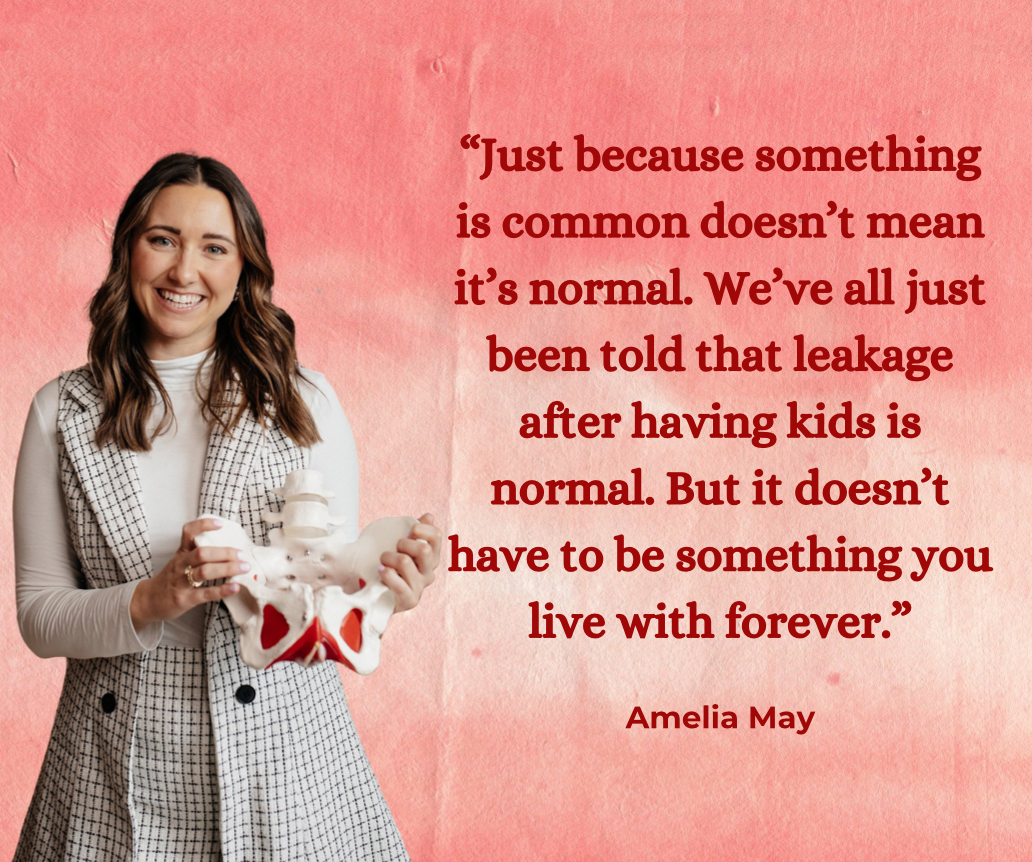
Yes, it happens literally every day. So yeah, and it sucks because we've all just been told that like this is normal and that's what happens, especially after you have kids. So you just like live with it because that's what the generations above us did. But it's like, no, there's a better way, like you don't have to do that every day if you don't want to.
Yeah, yeah. So that's why I was smiling for those that watched, because it was so like, I don't know, like serendipitous that I literally had someone say that earlier, maybe like two hours ago. That's so funny. And you use that as an example here, so yeah. That's how it goes. Yeah, so I know you work with moms. Um we just kind of like touched on. Is there other people that you try to encapsulate in the work that you do, or is your primary focus working with women who have had children?
Yeah, I mean, I think obviously I see a lot of pregnancy and postpartum or just like moms in general, obviously, because it's like the least barred entry, right? Like they're the group that gets most targeted for pelvic floor issues or is the most aware because they quite literally have a lot going on in that area, right? Um, so that's like the obvious low-hanging fruit, of course. And I do so enjoy working with that population. But I also want to like highlight all these other people who have things going on too. And I don't want people to think that you can't come to pelvic floor therapy if you're not a mom or pregnant. And so, yeah, I treat all genders, all orientations. You know, male pelvic health is really prominent. Like they all have poop problems. I'm gonna generalize and say that because like, how many times have we all seen our partners sit on the toilet for 20 minutes on their phones and like they all have hemorrhoids and they're all constipated? And I'm like, that's a pelvic floor problem, besides maybe some behavioral. But male pelvic health is really important for stuff like that. ED, prostatitis, um, they can have all the same issues that anybody with a vagina does. It's just their pelvic floor is oriented a little different. And then the LGBTQ community is huge for this as well, right? Because there's a lot of different things happening in terms of like the emotional stress of it all, but also like the physical, you know, with things like tucking, that can create more bacteria and then create more chronic infections, which then can create pelvic floor problems and they kind of store each other up. Also, anybody can experience sexual dysfunction at any stage, age, whatever. So, like that's also another big highlight. And then, you know, just also just the group of people who are experiencing severe like period pain, or it could all it could be ovulation pain, but just kind of around your cycle, hormonal pain, whether that's like post-menopausal or like something to do with like endometriosis, PCOS, things like that. So I think that's another really, really missed group, just kind of like what we talked about with like, you know, we're told to live with it forever. Like with hearing leakage, we're told that with period pain. And so that's actually not always normal. And we need to investigate on that. And again, there are things we can do to help. So really, I treat anybody who is like, I don't want to say 18 or older, because most people feel like individual and in control of their health before they're, you know, deemed an adult by the government. But like anybody who is like willing and able to come to sessions by themselves, I would love to work with parents if it's with kids too. I'm just not like a pediatric public floor therapist. So anybody who's like potty training age under maybe like 14 or 15, I don't typically see. There are some amazing therapists who do that. That's just not me.
Yeah. Yeah. I think something that I am realizing as we're talking here is that what you're doing with people in your sessions, hopefully, fingers crossed, can help them avoid things like needing medications for problems. Like you mentioned some sexual dysfunction disorders that I know have medications for, right? People go on birth control to help with period hormonal pains, discomfort. Like you could use those as resources, obviously, but like there's other things that are available to people who are suffering from those issues that maybe aren't necessarily talked about in your doctor's office. Because I certainly have never heard my doctor say, oh, you have menstrual pain, like you should think about pelvic P4 PT, where it's like, oh, maybe you could use this hormonal birth control to regulate your period. Not to like diss doctors, but I just think there's some things that are not being said that could be said in those appointments and uh referrals that could be made.
Yeah, you're totally right, Stephanie. I feel like I am also very much like a person who's like right down the middle between like I pull in some like very medicalized things, and then I also use some very like holistic, you know, if you want to use the word, more conservative care too. Like I think everything has a time and a place. And so medications can help supplement what we're doing here and there, if it's like pain medications or things of that nature, or like vaginal estrogen or HRT hormone replacement therapy are really big in my, you know, postpartum and post-menopausal groups because I'm like, you need that stuff. Like there's there's science that this helps and it will really help us during the rehab process as well. But yeah, when it comes to the birth control conversation, obviously, or ED medication, it's like there's only, there's only so much that that starts to help with in terms of like what can we do outside of that, or maybe that's just not our first choice. And, you know, like you said, it's like I can't I can't blame the physicians. That's what they're trained for, and we need that from time to time. And it is important. But yeah, I think this is just in general kind of that conversation about like the healthcare system where it's like we've been trained to go to our, you know, our PCP or doctor for everything, where if I was the same always growing up too, that's what we learned. And now we're really starting to kind of like, I don't want to say radicalize the health system, but really trying to use it for what it's supposed to be, which is like if I don't need surgery, medication, or imaging, my doctor might not be the place for me to go. There might be these other avenues like mental health therapy or physical or occupational therapy, speech therapy, I don't know, whatever it may be, the chiropractor, acupuncture, that could help me better to suit my needs. And it's just not, I just don't think we're as well educated on that, you know? It's just the system.
Yeah. Yeah. I do think coming back to this idea of like it could be useful for both, but like, wouldn't it be great if everyone was educated about both options? Right. Yeah. That's what we're here to do, to talk about it right now. Exactly.
Perfect.
Hopefully, more and more people are talking about this, these things, because you know, for myself in postpartum, I only knew about pelvic floor PT because I have a friend who's a physical therapist. She doesn't do pelvic floor physical therapy, but she knew about it enough to like tell me, like, oh, you should consider this. I was like, oh, great. And so again, going back to that group chat, I think to myself, like, did any of these women know about pelvic floor PT before I suggested? Like, you know, maybe they talked about their pelvic floor when they were pregnant because they were experiencing, like, who knows, the plethora of symptoms that occur during pregnant? The first one that came to my mind is like lightning crotch. Um, but like there's this need for it then too in postpartum. And it sounds like in a lot of other areas of life. Like, I'm curious if you could talk to like, are the treatments for these different issues something that people should expect to be working on for months, for years? I think that might be helpful to kind of give context for like how people can really benefit from your services.
Yeah, I feel like it's so dependent from person to person, which I know is an annoying answer because that's not very helpful. But I will say, like, we've tried to um over the years kind of get data points to answer this question a little bit more like an educated guess rather than just like, I don't know. And on average, we usually see people for like six to ten visits, but that could be over a span of three months or an entire year because everybody kind of does something different. Because, like I said, we really individualize your care. So I recommend that I see people like once a week or once every two weeks, just so we can like help make some progress and like their physical body work. And as you get better, of course, we like space those out and try to see how you can handle things more independently, because that's always the goal of physical therapy, is that you don't need to be in PT. And so some people really do follow that, and they come every two weeks and they're really on top of their homework, and you know, their body is adjusting well to the things we're doing, and they're done in three months' time, no symptoms, and they're really good long term. And then there are people who just like have, as I'm sure you know, so many high stress, a lot going on. They have a newborn, they're going back to work. I mean, like there's so many situations you can't map out, or just because of the nature of my work, it's like I see a ton of people with chronic chronic pain or like really intermixed stuff of like autoimmune issues, endometriosis, thyroid issues, and they have chronic back pain. And it's like, okay, how do we try to mitigate all these things at once? So that's why it's hard to answer, but I will say most people, it's like a good maybe three, six months timeline. But again, this isn't like your typical in-network PT where you're coming like multiple times a week. This is like you see me once or like somewhere between two and four times a month at most. And like you're really doing five minutes of movement every day on your own. That's really helping move the needle forward, if that makes sense.
Yeah. Yeah, it does. Yeah, thinking about I've been in both pelvic floor PT and regular PT. And something that I had a physical therapist once tell me is like usually the trajectory of feeling better is not linear, like people maybe want it to, because when you start feeling better, you might do more. When you start feeling better, you might find yourself like, I don't need to do that exercise. And so there could be like bumps in the road, which I imagine you probably have witnessed too. So it kind of probably feeds into the answer going back to what you said, is like there is no like one chew fits all here.
Totally. Yeah, and I love that you said that because that's what I say to people all the time is like healing is not linear. Progress doesn't necessarily always mean like no pain. Also, like progress can be like you're lifting more weight than you used to, or your pain is less intense, or it's less frequent. You know, pain is so subjective, and like I am of the mind that like I don't think you're ever not gonna have some level of pain in your life. Like, that's just because if you're an active human who's living life, that's just how it's gonna go. So it's really about mitigating or like being able to manage it on your own. And like, yes, less pain is good. I'm not saying that, but like, you know, it's not the only trajectory we're looking for. So that's why there's hills and valleys, and why they say it's not linear or this like nice perfect upward slope. It's like the hills and the valleys on the slow way up.
Yeah.
Yeah.
I want to maybe shift gears just a little bit and kind of ask you a little bit more of like what drove you to start the practice that you're you're doing, and yeah, maybe talk specifically about like your journey to become a pelvic floor, PT.
This is like the most common question I get. I don't know if it's like people are just genuinely interested or they're like, you're young or you're not a mom. So like, how did this happen? Um, so I wish I had a really cool story for you, Stephanie, but I don't. Um I just rem I like vividly remember in PT school, which is you know, three years of graduate school to get our doctorate after we already did four years of undergrad. And um, I mean, we got three semesters worth of information on orthopedics, and we got a whole semester on pediatrics, a whole semester, maybe two, on neuro. So that could be like stroke and traumatic brain injury rehab. And we had one lab and one lecture on pelvic floor and women's health. And I was like, what the F. Because I was like, women make up the large majority of the population. So first off, that doesn't make any sense to me. Second of all, if like the thing they had told us was like a main reason we see people for is having babies, of course. And I'm like, well, there's tons of people having babies every day, all the time. Like, I don't know that that's ever gonna stop. So I was like, this is interesting. Like I felt the disparity there kind of made me angry. And then I tried to get an internship in school in it just because we have to do like four different rotations in our last year. We're basically like working for free, and you really learn a lot on those clinicals. Like that's where you like I really felt like I started to understand because everything in school is just preparing you for the written board exam, but not for like always how to treat a patient. And um, I didn't get an internship in it because it was so heavily coveted, because the majority of PTs are female, especially my class was like very female dominant. And I think people were just like interested to see what it was about, or I don't know, there was a strategy about how we all did our internships. So, anyways, I didn't get it. So I was just like, okay, whatever. At the time when I went to school, if you didn't have an internship, you weren't getting into that field. Like you had to kind of specialize. So I just kind of like threw that away. And then I worked in orthopedics for about a year and a half. And well, it was about a year when COVID hit. I'd been working for a year, and um, I wasn't loving my job. I just felt like it was like a very like puppy mill, if you will, like a pet spart is how I describe it. Like it's got its merit and it's fine, but they turn and burn people, not only the patients, but the therapists. And I very much felt that. I was like, I'm one year out of school and I'm already burnt out, and I spent way too much money in student loans to feel like this. So I was like, I can't do this anymore. And so I took those two to three months that I had off during COVID because you know, they furloughed me um because nobody was doing elective surgeries, and that was a lot of what we saw. And I just took a bunch of continuing education courses and I made like my professional Instagram. Um, it was so funny back then. It was so bad. I mean, not that it's amazing today, but it's just funny to like see the difference. And um, you know, in doing those courses, I kind of came back to like, I really liked this idea of this pelvic floor thing. Sorry, this is so long-winded to what you asked.
Oh, tell us.
Um, I was like, I'm so into this pelvic floor thing, I should take some courses in it. And one of the people I kept interacting with on Instagram over and over at the time was um my partner, like now partner in the business, Becky Allen. And she was, you know, we had like chatted on Instagram, gone back and forth. I eventually went back to my job, was trying to find a new job. So like six months had passed. And one day she just randomly messaged me and she was like, Hey, I feel like you're interested in like the women's health public floor side of things, and I need to hire. Would you want to interview? And she literally DM'd me and out on Instagram, and I was like, the heavens opened up, like this is good timing for me. Yes, like what when can I come in and interview? I was like, I will leave this job today, you know. And I went in to interview her, saw like two patient treatment sessions. We chatted for like 30 minutes and we were just like obsessed with each other. Like we instantly became just good friends, and she was like, Great, you're hired. When would you like to start? She didn't even say, like, do you want the job? She was just like, I know you want the job. And so she paid to just teach me all the things. And that was when I started with Genesis PTM illness in Dallas. That's where I was at the time. And um, I just loved it. And like, I just feel like it made me a better physical therapist because now I really understand how everything interconnects even more. And I felt like I was missing so many parts when I was treating people with like tailbone pain, or like, gosh, I remember I had a pregnant person once and I was like, I have no idea what to do with you because they just scare you into like not even touching them, or that they can't do anything, or that they're so fragile. And now I'm like, girl, you can run until you're 35 weeks pregnant, or go lift all that weight, you know, like it just changes your perspective on everything. And so over the years it just like evolved, and I loved Genesis and how they treated patients and treated their employees, and so I stuck with them for the last four and a half years, and now I'm branching out on my own, and it's just been amazing. And yeah, that's that's the journey. Okay.
Yeah, I always find it interesting how people end up like where they're ending up, and yeah, I think there is, unfortunately, as we've already spoken to, like a lot of holes in the healthcare system. Um, and in the training for healthcare providers, like I'll even speak for myself, like as a therapist, like I obviously they can only teach you so much. This is like me being being generous. They can only teach you so much in the two and a half years that I was getting my master's, like only so much can be learned in that time frame. I guess that's why they make us do CEs every two years so we can continue learning because there's just so much information to conceptualize. But yeah, we didn't get a single class on like how you know your hormones impact your mental health. And I'm like, men and women both have hormones. Like, and they impact your mental health significantly. And why did we not discuss this? Like, becoming a parent is a huge transition. We should maybe talk about that. We talked about job loss and like um stage end stage life counseling and you know, becoming a teenager, but like all this other hugely transformational time, and like both women and you know, men's lives becoming a parent, never even touched upon. So I just think it's so interesting the the gaps that are in our educational system that like lead people to maybe almost become like super fascinated and like hyper-fixated on this clearly is a thing. Like, literally, people are experiencing this every single day. And then people that like nerd out on stuff like that. Sounds like you and myself just like now then become like hyper fixated. I'm like, okay, there needs to be more. So I guess it's nice to need a soul sister when it comes to that energy.
Yeah, it's so frustrating too. Is that if it's like, oh, I spent all this time and money and I didn't even get everything I needed to be a professional in this like instance. And so, yeah, it's a good point about the CEs. It's that, or they just want to keep taking our money. I don't know. But I mean
You know, here we are. Capitalism.
Yeah.
I do think it is outrageous to think, and I don't know how much you spent on your program, but like, you know, tens of thousands of dollars to become like a graduate educated person. And then suddenly you also need to spend thousands of dollars outside of school to become more educated. And then if we're gonna talk about the overall system, you know, not to go down too much, but then like the system doesn't respect you because then they just like diminish your worth in a multitude of ways. And so it's like, okay, thanks, y'all. I've just trying to serve the community and help people feel better. Literally. Yes, literally. I'm gonna, you know, step off my soapbox. I appreciate it. Um, but yeah, I would guess I would love to kind of get back to talking about public floor PT. I'm trying to think what would be, I guess, interesting. The thing that you mentioned to me that I don't know much about is people who maybe have like gender dysphoria or are part of the LGBT community in the impacts there. Cause I think that's probably like a largely underserved population. So yeah, I don't know if you'd like to, if there's anything more you could share that's maybe feels important for people to know about.
Yeah, I think the biggest I don't want to say the biggest thing I find, but a very important aspect is just, you know, that like I think this is true for a lot of people, by the way, not just LGBTQ, but very much for that group of just like finding somebody you really connect with, because what we do is really intimate work, obviously, since we're going internal. So obviously finding people who you connect with on a personality level, the trauma-informed piece, of course. And then just feeling, you know, obviously like respected and cared for in a sense too, because you know, as much as some people might treat that, they might not feel as comfortable as you would think. And so, you know, I just find that to be like really important and I always want to really speak to that. And being here in Denver, in the you know, Boulder Denver area, of course, like we're really blessed to be in an area that I think there's a lot of amazing practitioners who are very well respected and respect well to their patients. So I think that's one really big piece. The second piece is like, you know, what would they be seeking care for? I guess was your kind of other question. Yeah, so gosh, everything the same as what we've already discussed, right? Like bowel and bladder function, sexual dysfunction, and then like hip, back, tailbone pain. Those, of course, are some big ones. Like I said, there's like a higher instance, I feel like sometimes for individuals who are tucking. So like wearing compressive underwear and clothing can cause more infections, like I mentioned, which can cause pelvic floor dysfunction, like pain and stuff like that, tightness in the muscles, nerve issues because there's so much compression there. Also, you know, there's top and bottom surgeries, and so just healing from that, especially bottom surgery for people who are getting a vaginoplasty, um, you have to really work on expanding that area for intercourse to even be non-painful and not as a process in itself. So, I mean, like there's lots of different reasons there that are really special to that community, of course. But like I said, you know, they're no different than anybody else. They can experience all the same thing as the rest of us. But I think it's just important to say we treat that group because they often get dismissed.
Yeah. Yeah. I guess my brain is like jumping to the tangent here of I don't know if you've ever read the book, The Body Keeps the Score. Because I think like I don't know, I go back to this idea that like trauma is always held in the body. And I imagine since a lot of people aren't aware of their pelvic floor, like trauma gets stored there because it's a part that in our puritanical culture that we've like suppressed and maybe don't pay attention to. Maybe our ins our awareness or physical awareness of that space isn't as like highlighted as like, oh my back hurts, or oh my shoulder hurts. Like we maybe don't talk about it or gets minimized and pain goes on for longer than it needs to, and then therefore there's like greater weakness and like more guarding that happens for people, and so then it's like it just hurts more and more and more over time. Yeah. Yeah, I'm sure you are all well well aware of all of this that I'm saying. Um, but I guess that all of that thought process led to my question around people who experience assaults and are victimized. Is that something that you also treat in your clinic?
Totally. And, you know, sometimes I am not even a hundred percent sure if somebody's been like legitimately assaulted. Um because, you know, I'm not gonna like make somebody tell me that. So sometimes people don't divulge, but they just kind of say, like, I've got some history or I've got some trauma, and I never quite know if that's mental or physical trauma. But sometimes, you know, we can start to piece those things together once we're dealing with like their physical body. But yes, very common. And just like you said, obviously, like trauma is stored all over the body, and that's why our body is so smart. I mean, you know these things, Stephanie, but like that's why we have compensatory strategies, and that's why we have tension, and that's why we have like what we call the pain cycle, which is, you know, again, as you know, like especially as it relates to things like painful intercourse and intimacy, it's like our brain recognizes that this thing is painful because we've experienced that at one point, and now it's gonna store that in the brain and remember this particular situation as being painful. So the next time that this thing is about to happen, I'm gonna guard and tighten up against it as a protective mechanism so that I can try to prevent the thing from being painful. But because now we're tight and tense and we're still going through with the activity, then pain really does show up. And so now we're in the cycle we can't get out of. And that's obviously just one example, but that's a big one that we use, you know, in relation to intimacy, of course. And getting your physical body to not respond to that is one thing, but then getting the mental piece, your nervous system, to not calm down, which is such a big reason why I mean I even met you, Stephanie, was because I was looking for people to refer out to for things like this, because mental health therapy, I think, is so important mixed with physical therapy in general, but especially in my world, because especially when it comes to intimacy, our brains are just all over the place. So, yes, trauma is a big one that we see. And just like you said, like, you know, maybe it's not even stress or legit trauma, but like it's just anxiousness or day-to-day stressors. And just like we clench our jaw and our neck kind of like our shoulders rise up and our neck gets tense from stress, your pelvic floor and your hips do the same thing. So they're kind of one and the same when it comes to stress, which is just even a lesser form of what I would call trauma.
Yeah. Yeah. I d I wanted to highlight that because I think there is this like huge interplay between like what physical therapists do for the body physically, and then what therapists, mental health therapists, like help people with in therapies. Like there's this um syn synchronicity that I think if people were to be open to doing both, like it could be of real benefit of them because, like, yeah, your mind impacts your body, and your body impacts your mind. And yeah, there's no way to really like separate the two. Like, you know, I have people who come to therapy all the time and complain about pain. And I'm like, you know, there's other providers that are available for you to consider to help move this process along. Like, obviously, we can work on like your stress response and like trying to get you to calm your body, but like if you're in this like pain cycle, you might need other, you know, people to to help you. So that's that's why I brought it up, not to like, you know, for the listener to make anyone feel too uncomfortable, but just like educate, like these things are so interconnected.
I love that though, that you brought it up because I think, yeah, if we don't talk about it, it's never, it's never gonna see the light of day.
Yes. Yeah. And that's kind of what this podcast is about, like talking about things that are slightly uncomfortable potentially, or like re redefining like what it means to get help for yourself that you need rather than kind of be afraid to ask or not be in a mental space where you feel like there are people to even talk to about these things. Yeah, I'd love for you to share with our listeners how they can find you, how to connect, um what you're working on now. If there's anything you want to plug, I'd love to have our listeners contact you.
That's so sweet. Yeah. You can find me on Instagram. That's like honestly, I feel like the place where I live the most, regrudgingly. No, I'm just kidding. Like it's fun, but it's a lot of work. Um my Instagram is at D-R period Amelia A-M-E-L-I-A underscore d p t. And um in there you'll find all the things too. But yeah, if you I work with people virtually or in person for pelvic floor concerns. Um, so you can find me at saunderpt.com and saunder is spelled S-O-N-D-E-R. And that's where you can find out more info about my practice or if you want a book, all the information's on there.
Well, awesome. Thank you so much for coming on today.
Thank you for having me. It was so sweet to see you again, too.
Thank you for tuning in to Redefining Us once again and share with other people so other people can continue to listen to Redefining Us and we can get into more listeners' ears. If you follow us or subscribe or leave a comment or review, that would be greatly helpful for other people to find us, and also just for me to get some feedback. What do you guys want to hear me say? What do you women care about hearing? I'm totally open to bringing on guests and talking about topics that are unique and inspiring to everyone, so please let me know. And this year, hopefully we've full of a lot of community building, a lot of public speaking, a lot of resource sharing. So I really encourage you to follow us on social media at Wellminded Counseling on Instagram as our handle, as well as going directly to our website, wellmindcounseling.com backslash redefining us, so you can be in the know with all the things that are happening in the Redefining Us community. Once again, thank you so much for listening and keeping awesome.